

 English
 Français
 Español
 Português
 عربى
عربى









 Knowledge
Single section vs. Double section wall mount network cabinets: Which offers better accessibility?
In modern communication infrastructure, network cabinets play a critical role in protecting, organizing, and supporting networking equipment. Whether deployed in enterprise offices, telecommunications facilities, transportation systems, educational institutions, or industrial environments, the cabinet serves as the physical foundation for servers, switches, patch panels, passive optical components, and cable management systems. Selecting the right cabinet structure directly affects installation efficiency, maintenance accessibility, cooling performance, and future scalability.
Among wall-mounted solutions, the debate between single-section and double-section designs remains one of the most important considerations for network planners. Organizations evaluating a wall mount network cabinet single double section configuration often focus on accessibility, equipment protection, cable organization, and lifecycle maintenance costs. At the same time, compatibility with a 19 inch server rack cabinet standard remains a primary requirement because most networking devices are designed around this internationally recognized mounting format.
Cabinets today are expected to provide more than simple equipment storage. Modern designs must offer high load capacity, optimized cooling, structured cable routing, physical security, and sufficient space for future expansion. By integrating these capabilities into a well-engineered enclosure, organizations can create a secure and efficient operating environment that supports long-term network reliability.
Understanding Single-Section Wall Mount Cabinets
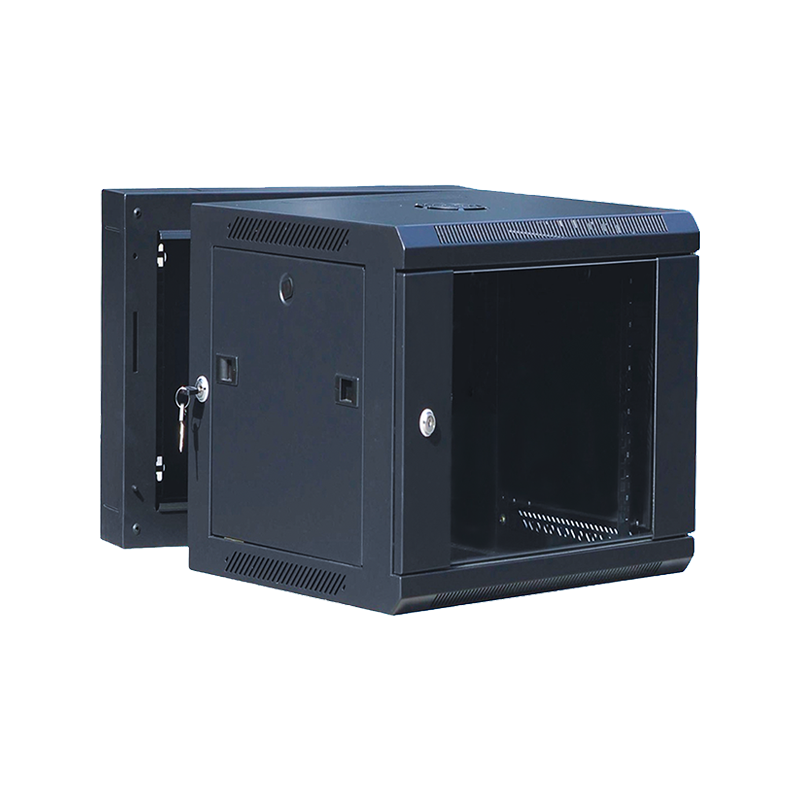
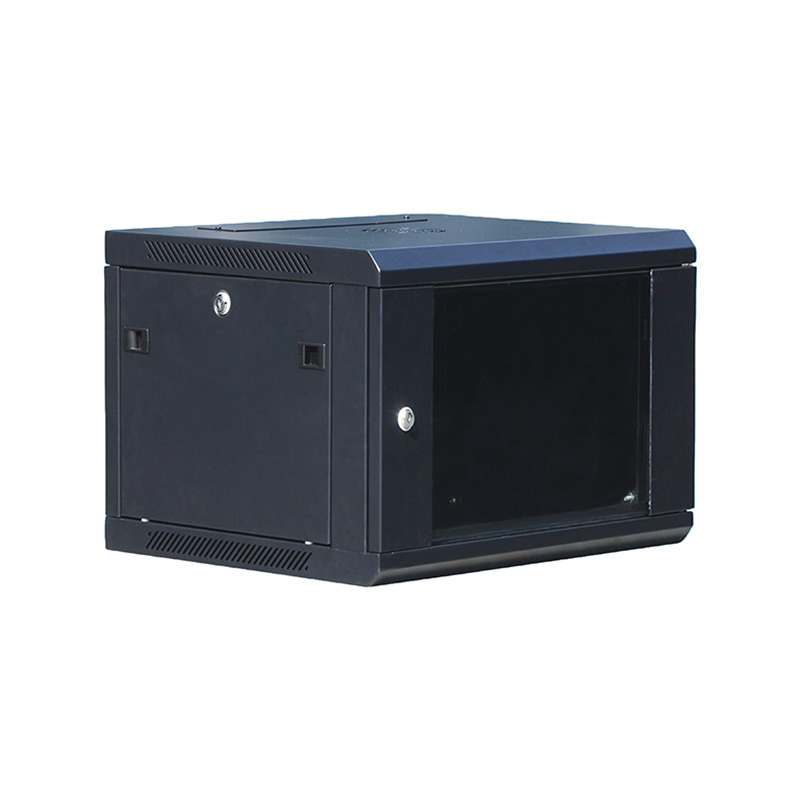
A single-section wall mount cabinet is a compact enclosure consisting of a fixed frame structure and front access door. This design is widely used in locations where equipment density is relatively low and where wall space is limited. Because the cabinet remains fixed against the wall, technicians primarily access equipment from the front side. Single-section cabinets are often selected for branch offices, retail stores, small telecommunications rooms, surveillance systems, and localized network distribution points.
When organizations evaluate a wall mount network cabinet single double section solution, single-section models are generally viewed as the economical option. Their straightforward construction reduces manufacturing complexity while maintaining adequate protection for switches, routers, patch panels, and passive optical equipment. In environments where cable modifications occur infrequently, the limited rear access is rarely considered a disadvantage.
Core Technical Characteristics
Single-section cabinets typically feature welded steel construction, lockable front doors, removable side panels, ventilation openings, and mounting rails compatible with the 19 inch server rack cabinet standard. The design prioritizes structural simplicity while ensuring reliable equipment support. Because there are fewer moving parts, maintenance requirements are generally lower than those associated with more complex cabinet designs.
- Compact footprint for limited installation spaces.
- Simple installation process.
- Lower procurement and maintenance costs.
- Suitable for low-to-medium equipment density.
- Reliable protection against unauthorized access.
From a deployment perspective, single-section cabinets are particularly effective when network equipment remains relatively static throughout its operational lifecycle. Organizations that prioritize cost efficiency and straightforward installation frequently consider this category sufficient for their operational requirements.
Application Scenarios
Common applications include security monitoring networks, wireless communication nodes, educational campuses, small enterprise offices, and distributed network access points. In these scenarios, technicians usually require only front-side access during routine inspections, making the fixed-frame architecture practical and economical.
The ability to integrate cable management accessories, patch panels, and passive optical components ensures that the cabinet supports organized network operation without occupying excessive floor space. This makes the single-section model particularly valuable in facilities where space optimization is a major concern.
Understanding Double-Section Wall Mount Cabinets
Double-section wall mount cabinets are engineered to improve maintenance accessibility. Unlike fixed-frame models, these cabinets incorporate a hinged rear section that allows the entire enclosure to swing away from the wall. This feature provides convenient access to rear-mounted equipment connections, cable pathways, and power distribution components.
For organizations seeking enhanced serviceability, a wall mount network cabinet single double section configuration often favors the double-section approach. Technicians can access both front and rear equipment interfaces without removing devices or disconnecting cables, significantly reducing maintenance time and operational disruption.
Accessibility Advantages
Accessibility is the defining characteristic of the double-section cabinet. As network environments become increasingly dense, cable routing complexity grows correspondingly. Rear access enables technicians to identify connections quickly, perform upgrades efficiently, and minimize risks associated with cable congestion.
- Open the front door for equipment monitoring and configuration.
- Release the secondary section to expose rear connections.
- Perform cable additions or modifications.
- Inspect power distribution and grounding arrangements.
- Close and secure the cabinet after maintenance completion.
This workflow dramatically improves operational efficiency, particularly in environments where frequent changes occur. Network administrators can complete maintenance tasks faster while reducing the likelihood of accidental cable disconnections.
Typical Deployment Environments
Double-section cabinets are commonly deployed in telecommunications rooms, transportation infrastructure, industrial automation facilities, healthcare institutions, and enterprise communication centers. These locations often experience ongoing equipment expansion and require frequent access to cable termination points.
Because these cabinets support comprehensive cable organization and improved maintenance accessibility, they are particularly beneficial when installed as part of a larger 19 inch server rack cabinet ecosystem. The additional flexibility helps organizations maintain operational continuity while supporting future growth requirements.
Comparative Analysis of Cabinet Categories
Selecting between single-section and double-section cabinets requires a balanced evaluation of installation conditions, maintenance expectations, equipment density, and budget constraints. The following comparison highlights the most important differences.
| Category | Single-Section Cabinet | Double-Section Cabinet |
| Accessibility | Front access primarily | Front and rear access |
| Maintenance Efficiency | Moderate | High |
| Cable Management | Basic to moderate | Advanced |
| Installation Cost | Lower | Higher |
| Expansion Capability | Limited | Strong |
| Recommended Environment | Stable networks | Growing networks |
Although both designs support standardized networking equipment, organizations expecting frequent upgrades typically benefit more from double-section cabinets. The enhanced accessibility often outweighs the higher initial investment by reducing maintenance labor and minimizing downtime.
Integrated Communication Cabinet Solutions and Industry Applications
Beyond cabinet selection, organizations increasingly seek comprehensive infrastructure solutions that integrate equipment housing, network planning, deployment support, and long-term maintenance services. Wanma Technology Co., Ltd., established in 1997, specializes in communication cabinets, communication electronic equipment, and passive optical components that support modern telecommunications and networking environments.
The company's solutions are widely applied across Ethernet networks, optical communication systems, central equipment rooms, high-speed railway projects, and urban rail transit infrastructure. These deployment environments demand reliable cabinet systems capable of supporting both current operational requirements and future expansion strategies.
When designing a wall mount network cabinet single double section solution integrated with a 19 inch server rack cabinet architecture, engineering teams must consider site conditions, cable routing complexity, environmental factors, equipment density, and maintenance accessibility. These considerations influence cabinet selection as much as technical specifications themselves.