
 English
 Français
 Español
 Português
 عربى
عربى




Cost-Efficient Green Solutions
Minimalist sites + intelligent operations balance cost considerations with dual carbon objectives.



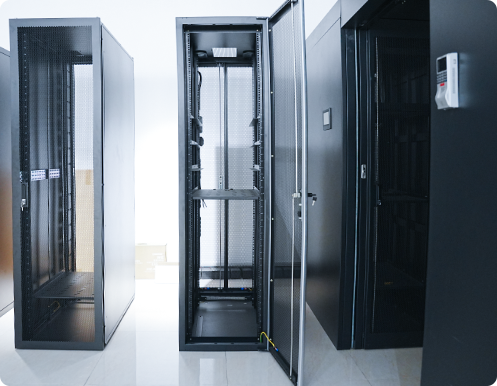
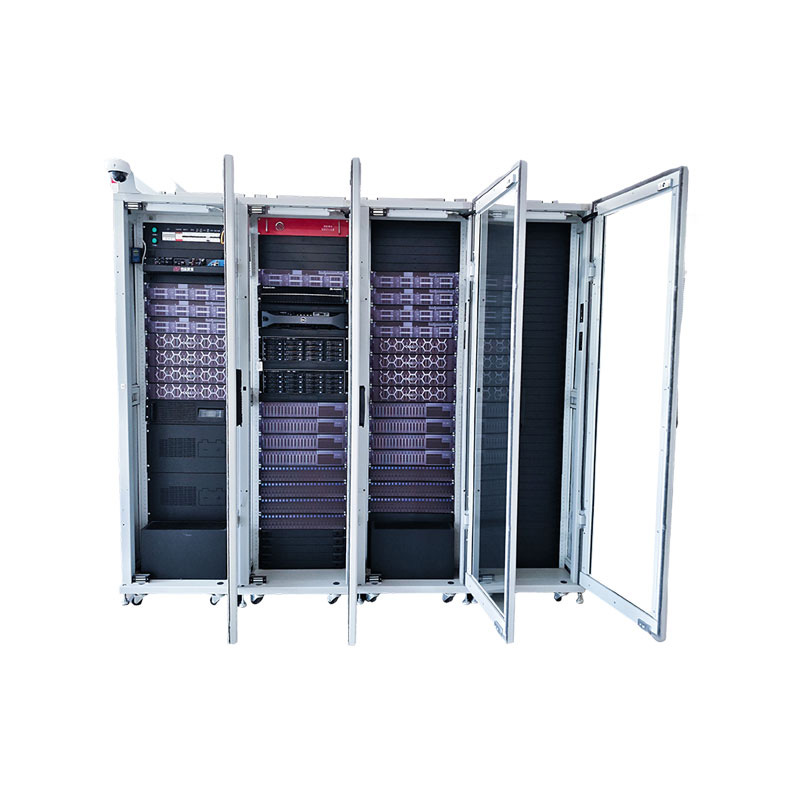
—Each module supports up to seven cabinets (including utility cabinets, IT cabinets, battery cabinets, and network cabinets), with both sides of utility cabinets permitting flexible expansion. Individual IT cabinets accommodate loads ranging from 1 to 10kW.
— All components undergo factory pre-manufacturing, pre-installation, and pre-testing, ensuring product quality while enabling rapid on-site deployment.
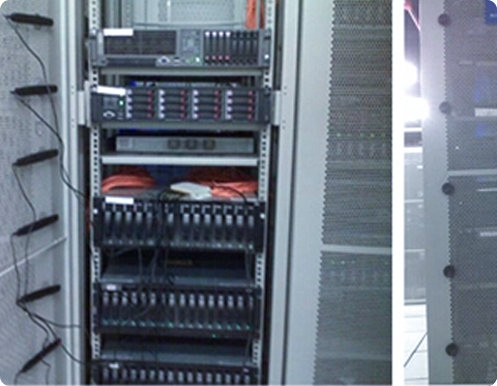
— Real-time monitoring of asset quantity, attributes, and location;
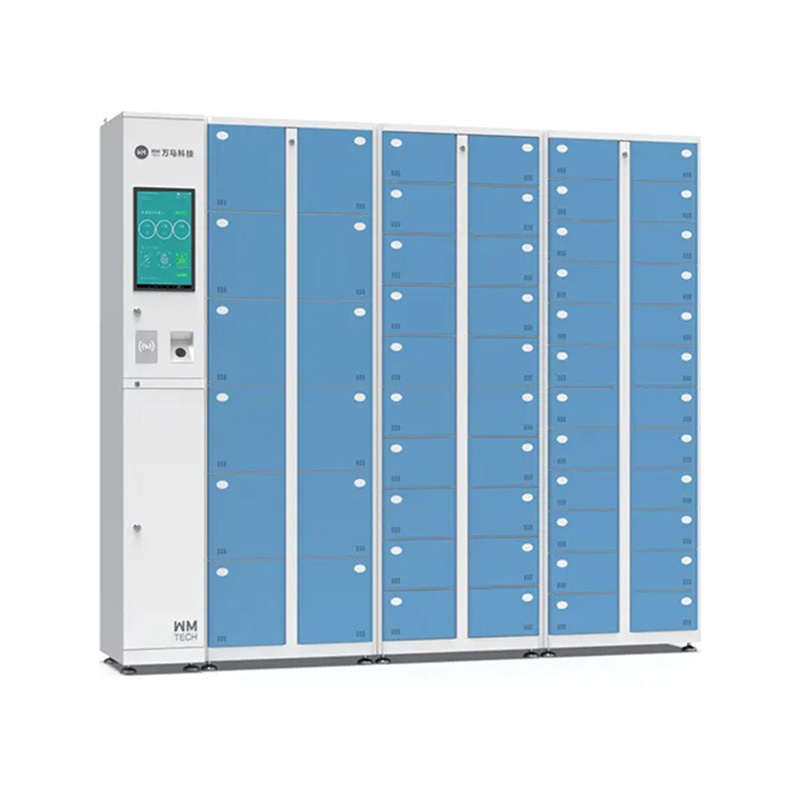
— Anti-theft measures: alerts when assets leave unauthorised locations or when tamper-proof tags are removed;
— Centralised collection and upload of all monitoring systems within the equipment room, covering power supply, environmental conditions, temperature control...
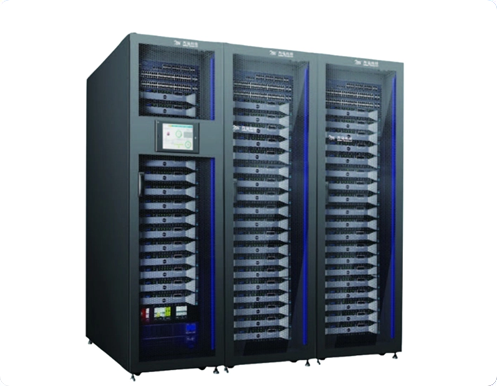
—By frame structure: welded cabinets and modular cabinets;
—By airflow configuration: front-airflow cabinets, bottom-airflow cabinets and top-airflow cabinets;

Factory Area
Employees
Export Regions
Engineers
Against the backdrop of rapid global digital transformation, telecom operators are entering a critical phase of network evolution. The deep convergence of FTTH (Fiber to the Home) and 5G technologies has become a core direction for building next-generation communication infrastructure. As demands for higher bandwidth, lower latency, and massive connectivity continue to rise, a key question emerges: how can the FTTH 5G infrastructure solution for telecom operators effectively support network upgrades and business transformation?
In the past, FTTH primarily served fixed broadband access scenarios, while 5G focused on mobile communications. These two systems developed relatively independently. However, with the rapid expansion of cloud computing, IoT, AI-driven video applications, and edge computing, user expectations have shifted from basic connectivity to ultra-reliable, high-performance network experiences.
In this context, FTTH and 5G are evolving toward a converged architecture. Optical fiber networks now serve as the backbone for 5G backhaul and fronthaul transmission, while 5G extends the mobility dimension of fiber networks. This synergy significantly improves overall network efficiency and reduces total infrastructure deployment and operational costs for telecom operators.
Despite the clear convergence trend, telecom operators still face several practical challenges during deployment. One of the most pressing issues is high-density equipment installation, especially in urban central offices and edge access points where space resources are limited.
Another major challenge is energy consumption. As 5G base stations and optical access systems operate together, power usage and heat dissipation become critical constraints. Additionally, the increasing complexity of network architecture demands higher stability and modular design capability from infrastructure equipment.
At the core of these challenges lies the need for upgraded infrastructure foundations rather than isolated device optimization.
In FTTH and 5G converged architectures, the relationship between data centers and access layers becomes increasingly interconnected. Edge data centers are required to process massive data streams generated by 5G terminals and fiber access users, placing higher demands on cabinet systems, power distribution, and optical-electrical integration capabilities.
In high-density deployment environments, reducing PUE (Power Usage Effectiveness) has become a key performance indicator for telecom operators. Through optimized cabinet design, improved power distribution efficiency, and enhanced thermal management pathways, overall energy efficiency can be significantly improved.
This is one of the core focus areas of Wanma Technology Co., Ltd., which has been deeply engaged in communication infrastructure since its establishment in 1997. The company specializes in communication cabinets, communication electronic equipment, and passive optical components, continuously supporting global communication networks with highly reliable infrastructure products.
In the next-generation communication infrastructure landscape, Wanma Technology Co., Ltd. provides not only standalone products but also system-level infrastructure solutions.
The company’s products are widely deployed across Ethernet networks, optical communication networks, national high-speed railway communication systems, and urban rail transit systems. These applications demonstrate strong stability and adaptability in complex environments.
In FTTH and 5G convergence scenarios, Wanma’s high-density communication cabinets and integrated optical-electrical solutions effectively support rapid deployment and scalable expansion at edge data centers.
Furthermore, the company provides scalable data center rack power solutions designed for the cloud and AI era, helping telecom operators optimize energy consumption while increasing computing capacity. This transition from a traditional equipment manufacturer to a comprehensive infrastructure solution provider strengthens its competitiveness in the evolving industry landscape.
The convergence of FTTH and 5G is not merely a technological combination but a structural transformation toward intelligent, green, and high-density infrastructure systems.
Future telecom networks will go beyond connecting people; they will serve as foundational platforms connecting devices, data, and intelligent systems. In this evolution, modularity, scalability, and energy efficiency will become decisive factors in determining network competitiveness.
Wanma Technology Co., Ltd. continues to invest in technological innovation and manufacturing capabilities to provide forward-looking infrastructure support. This enables global operators to efficiently adapt to FTTH upgrades, 5G-Advanced development, and future 6G evolution.
The core significance lies in combining fiber networks for high-speed stable transmission with 5G for mobile connectivity, creating a unified architecture that improves performance and coverage efficiency.
It requires high-density deployment capability, low energy consumption design, high reliability, and strong scalability to handle continuously increasing data traffic.
Edge data centers process data closer to users, reducing latency and serving as critical hubs connecting fiber access networks and 5G wireless systems.
Wanma Technology Co., Ltd. provides integrated solutions covering communication cabinets, optical components, and data center power systems, enabling comprehensive infrastructure support from equipment to system level.

 +86 13958188250
 +86 13958188250
 [email protected]
QR Code

Copyright © Wanma Technology Co., Ltd. All Rights Reserved.
Custom Ethernet Optical Network Railway Transit Equipments Suppliers


 Knowledge