

 English
 Français
 Español
 Português
 عربى




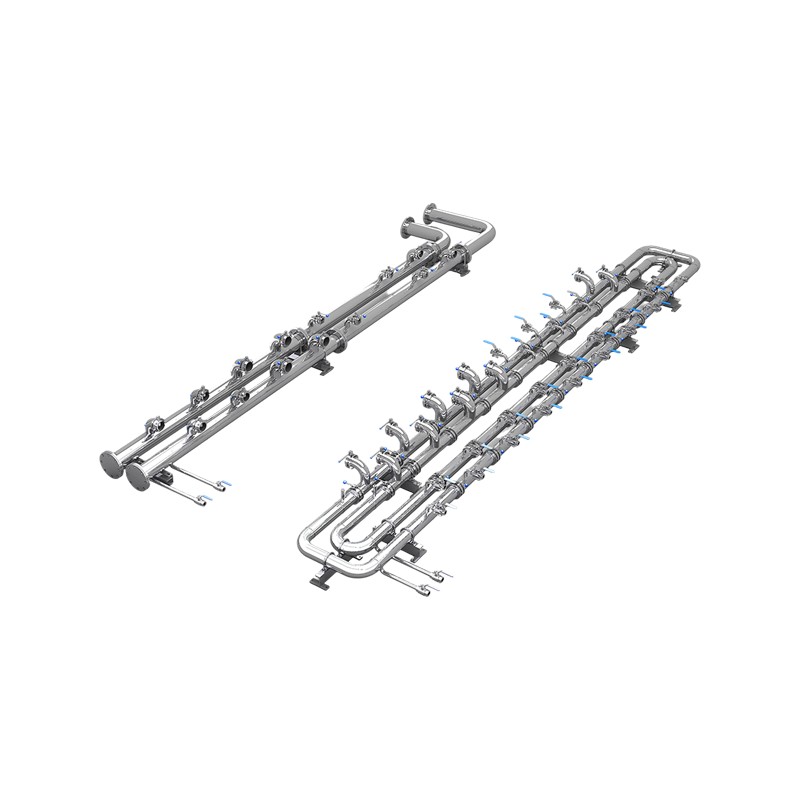
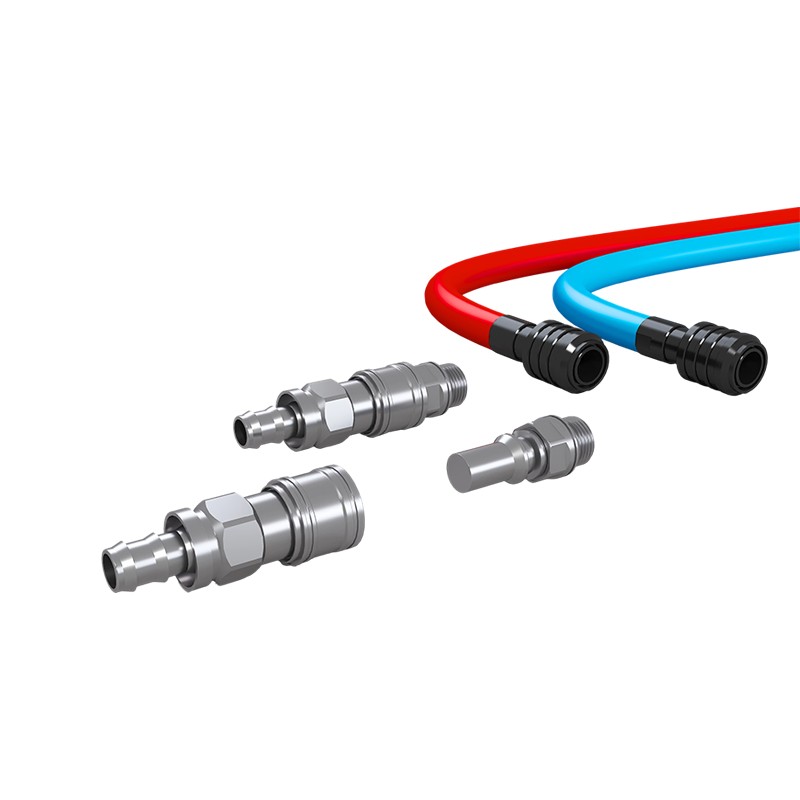
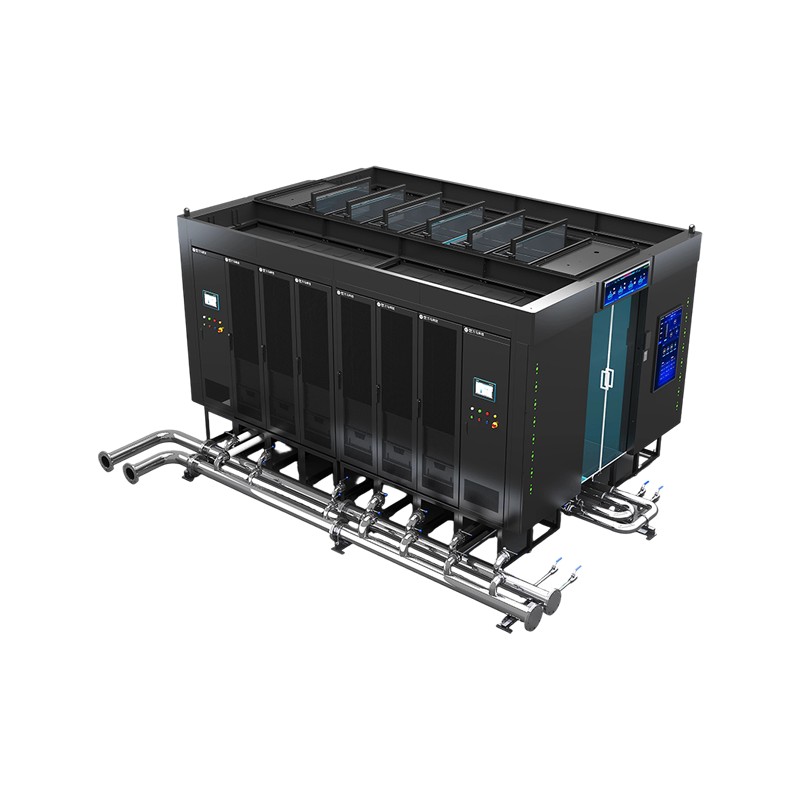
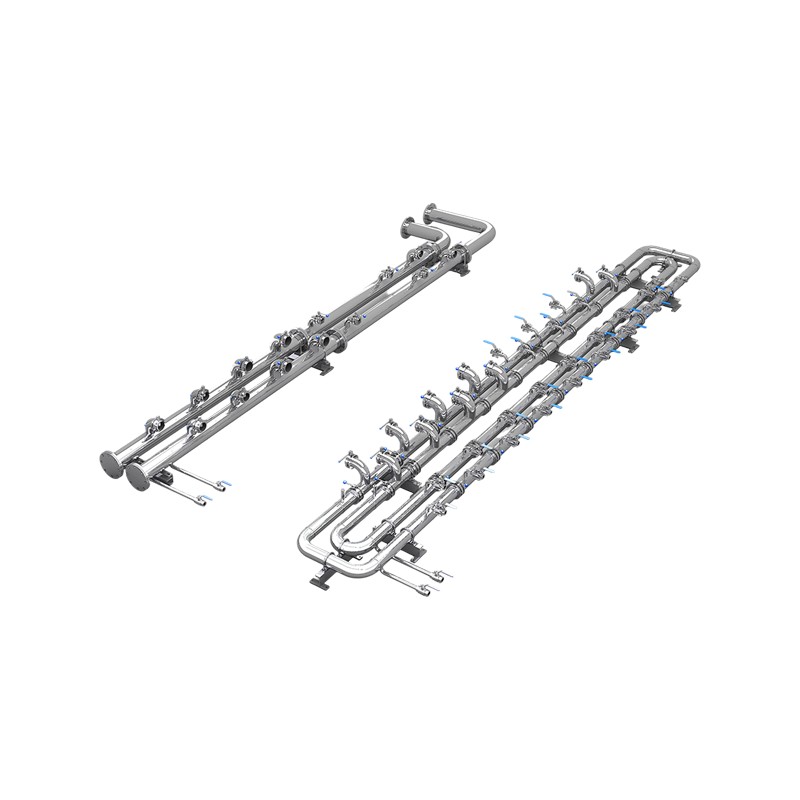
Product OverviewWM-SCL Secondary-Side Prefabricated Piping is a standardized coolant distribution system that connects the CDU to liquid-cooled server cabinets. The piping is prefabricated and quality...
See DetailsHow Prefabricated Piping for Liquid Cooling Secondary Side Eliminates Leaks and Cuts Deployment Time
Content
- 1 Why the Secondary Side Decides Whether Your AI Cluster Goes Live on Time
- 2 What Counts as Prefabricated Piping on the Secondary Side
- 3 How Factory Prefabrication Changes the Risk Equation
- 4 Specifications That Matter for Secondary Side Prefabrication
- 5 Integration With Racks and CDUs: The Interface Problem
- 6 Total Cost of Ownership: Where Prefabrication Pays Back
- 7 Frequently Asked Questions
- 7.0.1 Q1: How does prefabrication reduce total project cost if the unit price is higher?
- 7.0.2 Q2: Can prefabricated secondary piping be customized for high-density AI racks?
- 7.0.3 Q3: What is the typical lead time for a quotation and for shipment?
- 7.0.4 Q4: Is OEM or ODM support available for liquid cooling piping?
- 7.0.5 Q5: What testing documentation is provided with prefabricated piping?
- 7.0.6 Q6: How are prefabricated assemblies packaged for shipment?
- 8 Next Step: Define Your Secondary Loop and Request a Quote
Why the Secondary Side Decides Whether Your AI Cluster Goes Live on Time
Power densities in modern AI racks have climbed past 30 kW per cabinet, and in some high-density training clusters they now exceed 100 kW. Air can no longer carry that heat away. Liquid cooling has moved from a niche option to a baseline requirement. Yet the part of the loop that causes the most grief is not the cold plate, not the CDU, and not the coolant chemistry. It is the prefabricated piping for liquid cooling secondary side that ties everything together.
The secondary side is the closed loop between the coolant distribution unit and the server racks. It carries conditioned coolant to cold plates and returns warmed fluid back to the CDU. On a drawing, it looks simple. On a live construction site, it becomes a sequence of welds, flushes, pressure tests, and inspections that compete with every other trade for space and time.
Three failure patterns repeat across almost every liquid-cooled AI deployment:
- Schedule slip: on-site welding and brazing depend on certified labor that is often booked months in advance.
- Contamination: cutting and welding inside a live data hall introduces metal particles and debris that clog microchannels.
- Leak risk: every field joint is a potential drip point above equipment worth millions.
Factory prefabrication moves the riskiest work out of the building and into a controlled environment. The result is a secondary loop that arrives tested, cleaned, and ready to bolt together.
Key insight: The secondary side is where schedule, cleanliness, and leak integrity converge. Prefabrication is not a cost trick. It is a risk transfer from the construction site to the factory floor.
What Counts as Prefabricated Piping on the Secondary Side
The secondary side sits between the CDU and the rack manifolds. It typically includes supply and return headers, row-based manifolds, isolation valves, quick couplings, and the branch lines that feed each cabinet. In a traditional build, these components arrive as loose pipe, fittings, and valves, then get cut and joined on site.
Prefabricated piping flips that sequence. Spools, manifolds, and valve assemblies are cut, welded, cleaned, and pressure-tested in a factory. They ship as modules that match the rack layout and the CDU connection points.
Traditional Field Fabrication vs Factory Prefabrication
| Aspect | Field Fabrication | Factory Prefabrication |
|---|---|---|
| Weld quality | Varies by technician and site conditions | Controlled, repeatable, automated where possible |
| Cleanliness | Debris and particles enter the loop | Pickled, passivated, and capped before shipment |
| Pressure testing | Performed after installation, hard to isolate | Completed at the factory with documented results |
| Schedule | Dependent on trade availability and weather | Parallel with civil and electrical work |
| Leak points | Many field joints above live equipment | Fewer joints, most of them mechanically sealed |
The shift is not just logistical. It changes the physics of risk. A factory weld can be inspected, logged, and repeated. A field weld depends on who showed up that morning and whether the argon flow was set correctly.
How Factory Prefabrication Changes the Risk Equation
Prefabrication is often framed as a speed play. That undersells it. The deeper value is that it removes variability from three areas that determine whether a liquid cooling project succeeds or fails.
Leak Integrity Moves from Hope to Documentation
Every field joint is a leak candidate. A typical row-based secondary loop can contain dozens of welded or brazed connections. When those connections are made on site, the quality depends on access, weather, and the skill of the welder at that moment.
In a factory, the same joint is made under controlled conditions. Automated orbital welding and documented pressure testing replace guesswork. Helium leak detection and hydrostatic testing can be performed on the full assembly before it leaves the building. The customer receives a record, not a promise.
50-70% Reduction in on-site piping labor
Fewer Field joints above live equipment
24h Typical quotation turnaround
Cleanliness Is Built In, Not Flushed Out Later
Microchannel cold plates have narrow passages. Particles that would be harmless in a large chilled water loop can block a cold plate and cause a hot spot. Field cutting and welding generate exactly those particles.
Factory prefabrication includes pickling and passivation for stainless steel, controlled rinsing, and end caps that stay in place until the moment of connection. The loop arrives clean. The first flush is a formality, not a rescue operation.
Schedule Compression Comes from Parallel Work
The most expensive hour in a data center project is the hour that delays energization. When piping is fabricated in a factory, it does not wait for the building to be ready. It can be produced while civil works, electrical installation, and CDU commissioning are still in progress.
When the racks are set, the secondary loop arrives as labeled modules. Installation becomes a sequence of bolt-together operations with quick couplings rather than a welding project. Teams that have made this switch consistently report that the secondary loop stops being the critical path.
Specifications That Matter for Secondary Side Prefabrication
Not all prefabricated piping is equivalent. The specification choices determine whether the loop performs for a decade or becomes a maintenance burden. These are the parameters that engineers and procurement teams should pin down before requesting a quote.
| Parameter | Common Options | Selection Guidance |
|---|---|---|
| Material | 304 stainless steel, 316L stainless steel, PP-H | 316L for most AI data center secondary loops; PP-H for compatibility with specific fluids |
| Connection type | Quick coupling, flange, welded spool | Quick couplings at rack interfaces; flanges or welded spools at CDU and manifold connections |
| Cleanliness | Pickled and passivated, filtered flush | Specify filtration level; 100 to 200 micron filtration is common for secondary side protection |
| Testing | Hydrostatic, pneumatic, helium leak detection | Require documented test results for every spool and manifold |
| Customization | Dimensions, branch spacing, valve placement | Match to rack layout, CDU port positions, and maintenance access requirements |
Why Material Choice Is Not Trivial
304 stainless steel is adequate for many closed-loop applications. However, AI data center secondary loops often run continuously with coolant chemistry that can include inhibitors and biocides. 316L offers better resistance to chloride pitting and crevice corrosion. For loops that may see long service intervals and limited maintenance access, the incremental cost of 316L is usually justified.
Quick Couplings Are a Reliability Decision
A quick coupling is not just a convenience. It is a controlled leak point with a known performance envelope. Specifying couplings with dry-break functionality and verified cycle life reduces the risk of drips during maintenance. The alternative, breaking a flange or cutting a pipe for service, is far more disruptive.
Integration With Racks and CDUs: The Interface Problem
A secondary loop does not exist in isolation. It connects to a CDU on one end and to rack manifolds on the other. If those three elements come from different suppliers with different assumptions, the interface becomes a source of delays and custom adapters.
An integrated approach treats the rack, the manifold, and the secondary piping as a single system. Connection points are defined once. Branch spacing matches the rack pitch. Valve handles and coupling bodies are positioned so maintenance can be performed without removing adjacent racks.
What to Confirm Before Ordering
- CDU supply and return port sizes, positions, and connection types.
- Rack manifold inlet and outlet locations, including whether they are top or bottom fed.
- Available space above and behind racks for piping runs and service access.
- Coolant chemistry and maximum allowable pressure drop across the secondary loop.
- Maintenance strategy: which joints will be broken during service, and how often.
When these details are settled before fabrication, the secondary loop arrives as a matched set. Installation becomes a planned assembly sequence rather than a series of field modifications.
Practical note: The most common cause of secondary loop rework is not a manufacturing defect. It is a mismatch between the as-built rack layout and the assumptions used during piping design. Prefabrication works best when the rack layout is frozen before the piping is released to production.
Total Cost of Ownership: Where Prefabrication Pays Back
The unit price of a prefabricated spool is often higher than the sum of loose pipe, fittings, and field labor hours. That comparison misses the costs that appear later.
| Cost Category | Field Fabrication | Factory Prefabrication |
|---|---|---|
| Material and components | Lower unit cost | Higher unit cost |
| On-site labor | High, unpredictable | Low, predictable |
| Inspection and testing | Repeated, disruptive | Completed once at factory |
| Rework and leak repair | Common, costly, schedule impact | Rare, documented |
| Schedule risk | High | Low |
The payback is clearest when the cost of a delayed energization is included. For an AI training cluster, every day of delay can represent lost compute revenue that dwarfs the piping budget. Prefabrication is a schedule insurance policy with a measurable premium.
Where the Savings Actually Appear
- Reduced site supervision: fewer trades to coordinate and fewer inspections to schedule.
- Lower flush and fill cost: cleaner loops require less flushing and less coolant waste.
- Fewer maintenance interventions: reliable joints reduce unplanned service calls.
- Faster ramp: the loop can be commissioned as soon as racks are powered.
Frequently Asked Questions
Q1: How does prefabrication reduce total project cost if the unit price is higher?
The unit price is only one line item. Prefabrication removes field welding labor, repeated pressure testing, flush waste, and the risk of leak-related rework. When schedule risk is included, the total cost of ownership is typically lower than field-fabricated alternatives.
Q2: Can prefabricated secondary piping be customized for high-density AI racks?
Yes. Dimensions, branch spacing, valve placement, and connection types can all be customized to match rack layout and CDU port positions. Customization works best when the rack layout and coolant requirements are defined before fabrication begins.
Q3: What is the typical lead time for a quotation and for shipment?
Standard quotations are typically returned within 24 hours. Complex custom configurations may require one to two business days for a detailed quotation. Production lead time depends on scope and material availability, and is confirmed at the time of order.
Q4: Is OEM or ODM support available for liquid cooling piping?
Yes. OEM and ODM arrangements are available for secondary side piping, manifolds, and related liquid cooling assemblies. This includes custom labeling, packaging, and documentation to match project requirements.
Q5: What testing documentation is provided with prefabricated piping?
Every spool and manifold is pressure-tested before shipment. Test records, material certificates, and cleanliness documentation can be provided. Helium leak detection is available for applications that require it.
Q6: How are prefabricated assemblies packaged for shipment?
Assemblies are cleaned, capped, and secured on custom shipping frames. Labels identify the destination rack or manifold to simplify site receipt and installation. Packaging is designed to protect connection faces and prevent contamination during transit.
Next Step: Define Your Secondary Loop and Request a Quote
The secondary side does not have to be the part of the project that keeps everyone awake. When the piping is prefabricated, tested, and matched to the rack layout, installation becomes a controlled assembly process instead of a construction gamble.
To move forward, gather the rack density, the CDU connection details, and the preferred maintenance strategy. With those inputs, a secondary loop piping quotation can be prepared and returned, often within 24 hours.
Ready to simplify your liquid cooling deployment?
Tell us your rack density and layout, and we will provide a secondary loop piping quote within 24 hours.
PREV:No previous
article
NEXT:What Makes a Sorting and Packaging Station the Critical Control Point in Medical Fabric Management?
NEXT:What Makes a Sorting and Packaging Station the Critical Control Point in Medical Fabric Management?
Interested in cooperation or have questions?
Related products
-
-
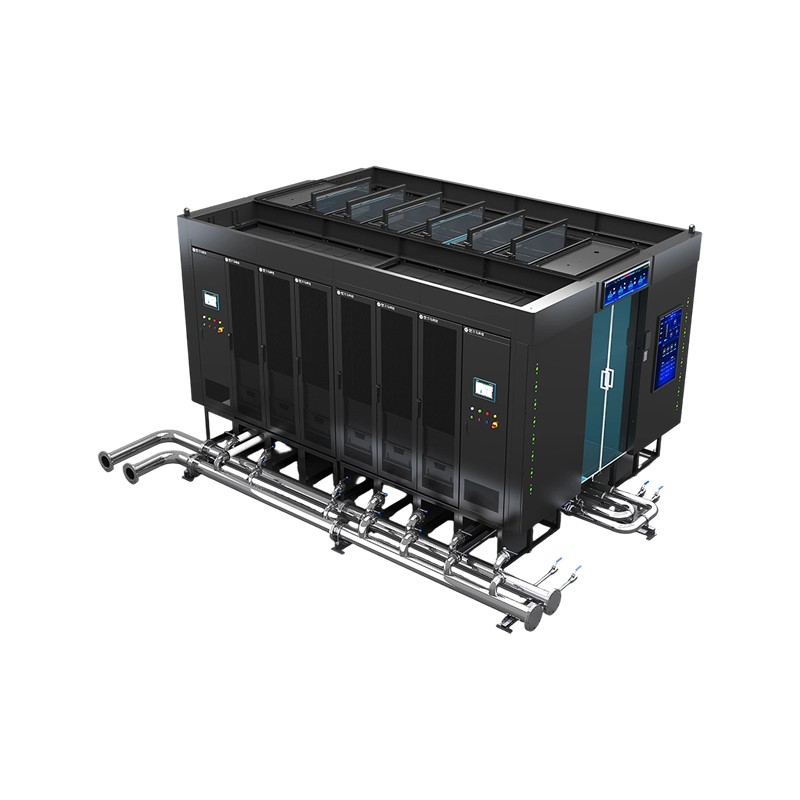
Product OverviewWM-HCM Air-Liquid Hybrid Micro-Module is an integrated data center solution designed for ultra-high-density computing applications. It adopts a dual-row, back-to-back layout and integr...
See Details -
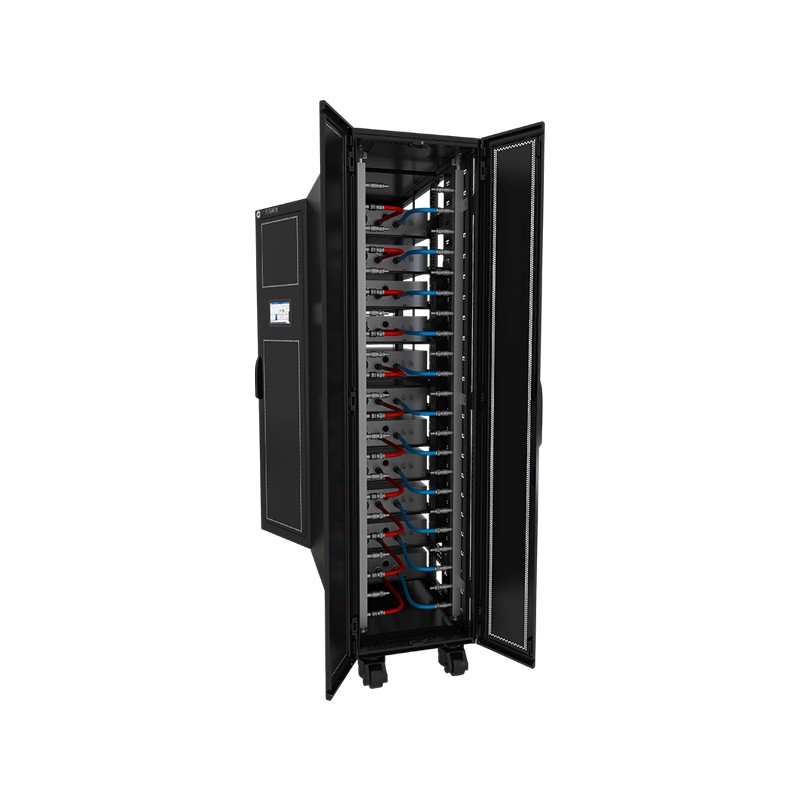
Product OverviewWM-LCR Liquid-Cooled Server Cabinet is a dedicated data center cabinet system that uses liquid as the cooling medium. Through circulating coolant, it efficiently transfers heat generat...
See Details -
Product Overview: The ZW□-12/T630-25 outdoor high-voltage AC vacuum circuit breaker is a key device designed for 12 kV overhead distribution lines. By deeply integrating the primary switching unit wi...
See Details
Ready to Get started ? Contact Us Now !

Product.
Contact Details.
-
 +86 13958188250
-
 +86 13958188250
-
 [email protected]
-
 AUDIT Email:[email protected]
- Wanma Industrial Park Taihu Yuan Town Lin'an District Hangzhou City China.
QR Code

Copyright © Wanma Technology Co., Ltd. All Rights Reserved.
Privacy
Custom Ethernet Optical Network Railway Transit Equipments Suppliers
