

 English
 Français
 Español
 Português
 عربى
عربى




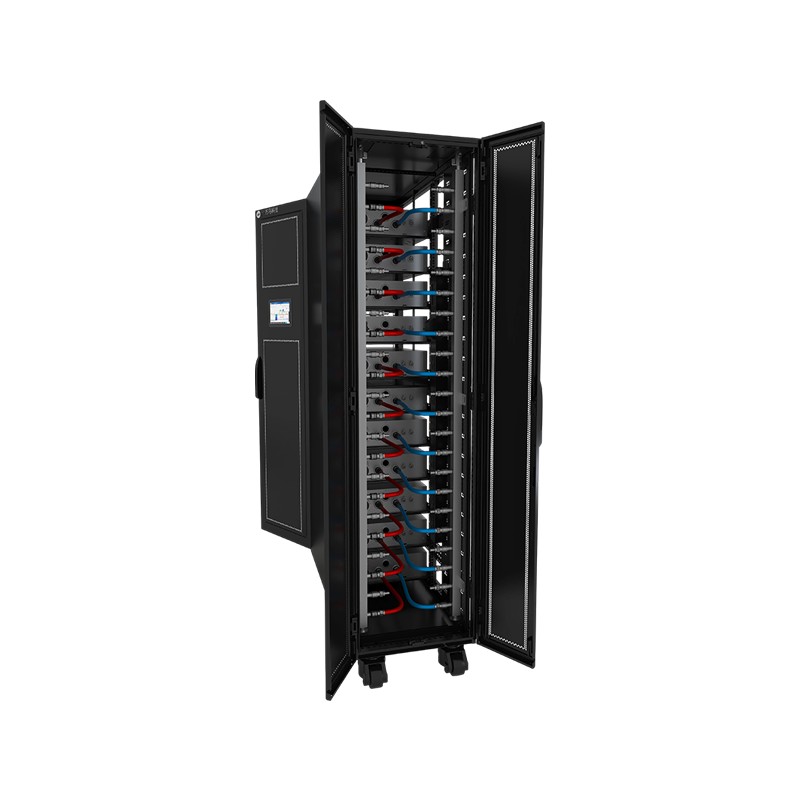
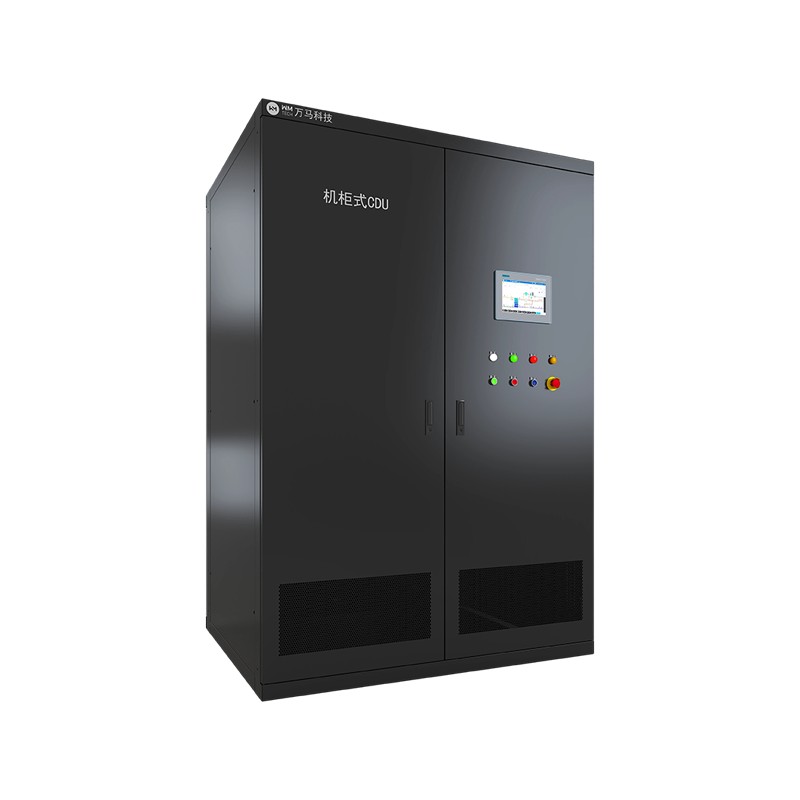
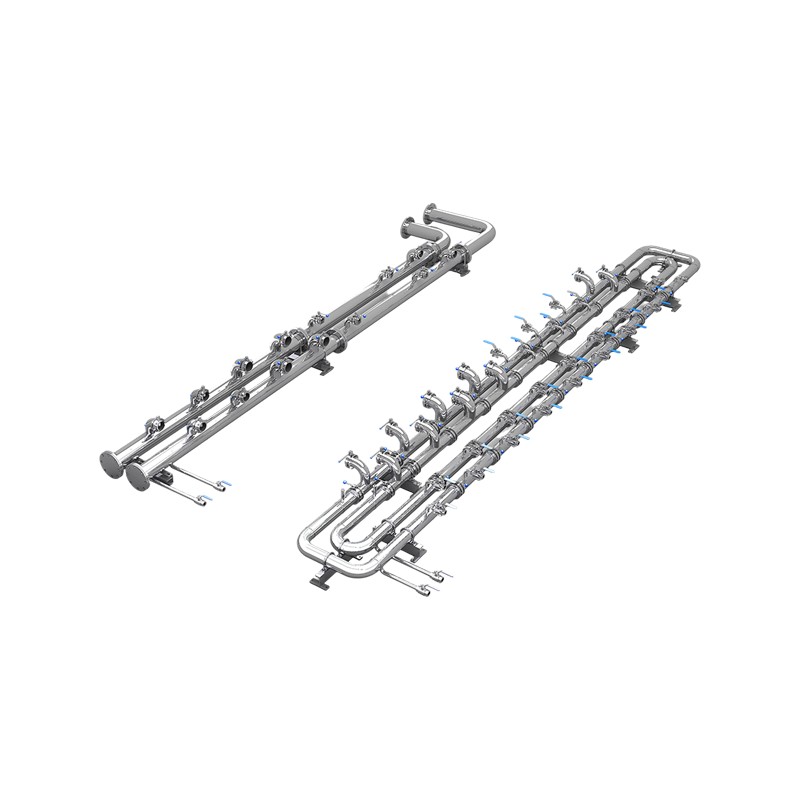
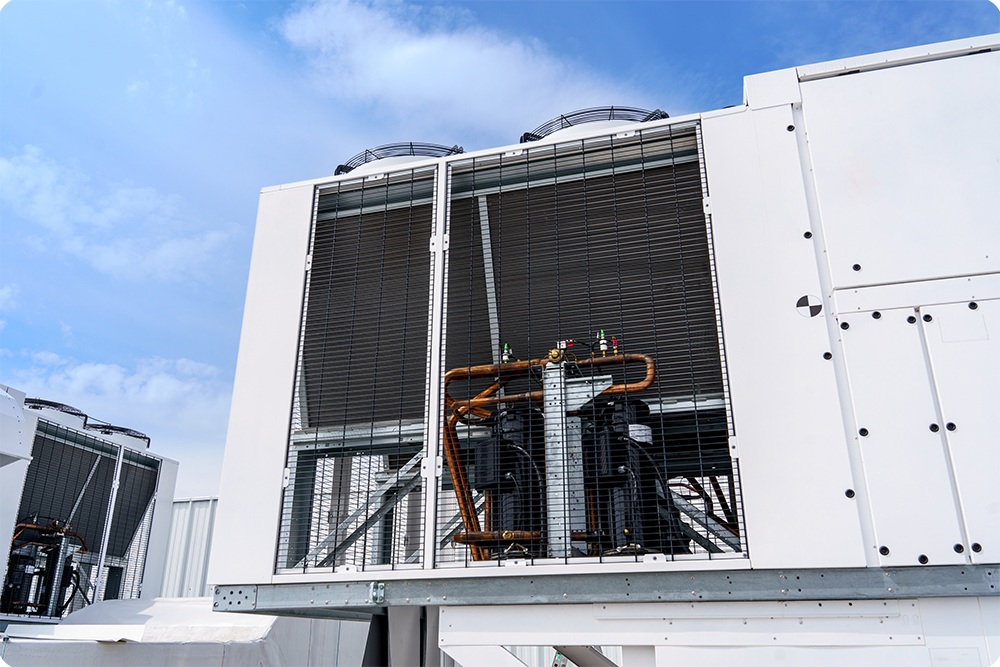
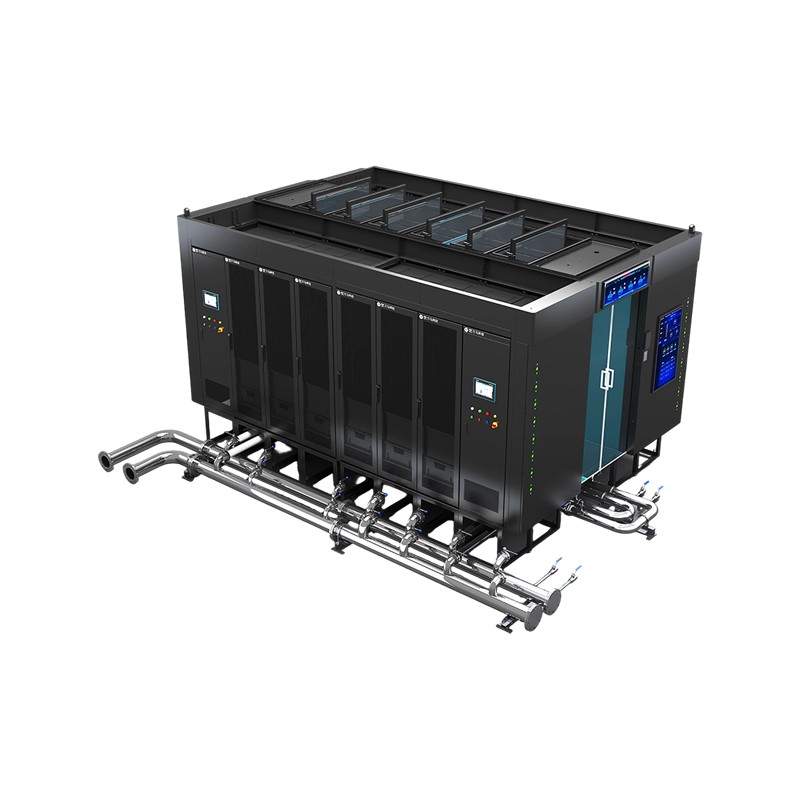
Product OverviewWM-HCM Air-Liquid Hybrid Micro-Module is an integrated data center solution designed for ultra-high-density computing applications. It adopts a dual-row, back-to-back layout and integr...
See DetailsAir-liquid Integrated Micro-Module & Secondary Pipeline Integration: Turnkey Liquid Cooling for High-Density Computing
Content
- 1 Why Pure Air Cooling and Pure Liquid Cooling Both Fall Short
- 2 What Defines a Hybrid Air-Liquid Micro Modular Unit
- 3 Secondary Side Piping Integration: Where Deployment Succeeds or Fails
- 4 Turnkey Delivery Versus Assembling Individual Components
- 5 Selection Guide and Application Scenarios
- 6 Design Checks That Prevent Costly Surprises
- 7 Frequently Asked Questions
- 7.0.1 Q1: What power density can a hybrid air-liquid micro modular design support?
- 7.0.2 Q2: Is secondary side piping welded on site or prefabricated, and how long does it take?
- 7.0.3 Q3: What flow uniformity should a manifold achieve?
- 7.0.4 Q4: Can an existing air-cooled facility be converted, or must it be built new?
- 7.0.5 Q5: How should coolant be selected for a hybrid loop?
Why Pure Air Cooling and Pure Liquid Cooling Both Fall Short
Rack power densities in AI computing clusters have climbed far beyond what traditional air cooling was designed to handle. Accelerator modules that once drew a few hundred watts now routinely exceed that level each, and a single rack housing dense training nodes can reach 30 kW or more. Air alone struggles to carry that heat away from the chip surface before hot spots form and force processors to throttle performance.
Full liquid cooling solves the thermal problem, but it introduces its own barriers. Many operators run existing facilities that were never designed for water loops, changing floor loading, or new maintenance routines. Conversion projects are slow, expensive, and disruptive to live workloads. The result is a transition gap, and this is where a hybrid air-liquid cooling micro modular data center design has found its role. It keeps liquid close to the hottest components while preserving the air-based environment that existing teams already know how to operate.
30 kW+Typical per-rack density targeted by dense AI training clusters
PhasedMigration approach favored by most operators with existing halls
HybridThermal strategy that assigns each medium to the load it handles best
For engineering teams, the question is rarely whether liquid cooling will be needed. The real questions are where the boundary between air and liquid should sit, how quickly the facility can adopt the new loop, and how much operational disruption the transition can absorb. Answering those questions requires looking at the architecture as a system rather than as a catalog of components.
What Defines a Hybrid Air-Liquid Micro Modular Unit
A hybrid air-liquid unit is not two cooling systems placed side by side. It is a single thermal strategy in which each medium handles the load it does best. Liquid is delivered directly to the highest-power components through cold plates, while precision air conditioning manages the surrounding airflow, the residual heat from memory, storage, and power units, and the environment of the containment zone.
Division of Thermal Responsibility
The table below summarizes how each heat source is typically assigned in a hybrid design. The allocation is deliberate: liquid is used where heat density is highest, and air is used where heat is distributed across many smaller components.
| Heat Source | Primary Cooling Medium | Design Purpose |
|---|---|---|
| Accelerators and processors | Liquid through cold plates | Remove concentrated heat at the source |
| Memory, storage, and power units | Precision air | Handle distributed, lower-density heat |
| Room and containment zone | Air with sealed hot aisle | Stabilize temperature and airflow paths |
Structural Characteristics That Matter
Dual-row back-to-back rack layouts with a sealed hot aisle create a compact footprint that suits both new high-density halls and retrofits of existing rooms. In-row cooling units are coupled with liquid-cooled racks so that the air loop and the water loop share one control logic rather than operating as independent islands. This coupling is what turns two technologies into one thermal strategy.
Three design attributes deserve particular attention when evaluating options:
- Back-to-back row spacing keeps hot exhaust air contained, which reduces recirculation and allows the in-row units to operate closer to their rated efficiency.
- Sealed hot aisle separates supply and return air paths, so the room does not need to be overcooled to compensate for mixing losses.
- Coupled liquid and air control lets the facility respond to changing loads without manual rebalancing when a new cluster is brought online.
Secondary Side Piping Integration: Where Deployment Succeeds or Fails
The thermal design of a hybrid unit is only as good as the piping that delivers coolant to it. The secondary side loop, which connects the coolant distribution equipment to the racks and cold plates, determines cleanliness, pressure stability, flow balance, and serviceability. Many projects that look sound on paper struggle during commissioning because the secondary side was treated as an afterthought. A well-planned secondary side piping integration approach addresses these issues before the first rack is energized.
Why Secondary Side Piping Should Not Be Assembled Freely on Site
Field-welded piping introduces variables that are difficult to control. Weld quality depends on ambient conditions, welder skill, and access. Internal debris from cutting and welding can circulate through cold plates and clog narrow channels. Pressure integrity is harder to verify after installation, and flow resistance varies from one loop to another. Industry practice generally favors prefabricated loops built under controlled conditions, tested before shipment, and then assembled on site using mapped interfaces.
- Fabricate the loop in a controlled workshop with defined cleaning and passivation steps.
- Perform strength and sealing pressure tests before any unit leaves the factory.
- Label every branch and interface so that field teams connect components exactly as designed.
- Verify flow balance and cleanliness with documented test records at handover.
Typical Material and Component Requirements
Stainless steel grades 304 and 316 are widely used for secondary side loops because they resist corrosion across the coolant types commonly deployed, including deionized water, ethylene glycol, and propylene glycol blends. Filtration upstream of cold plates is also essential. Coarse particles can block microchannels, and a filter stage prevents that failure mode from appearing months after commissioning.
| Component | Function | Selection Focus |
|---|---|---|
| Prefabricated loop | Carries coolant between distribution equipment and racks | Material grade, cleanliness, pressure testing |
| Manifold | Splits and collects flow across server branches | Flow uniformity across all branches |
| Quick-disconnect coupling | Allows isolated maintenance without draining the loop | Self-sealing design and compatibility |
| Coolant distribution unit | Maintains supply temperature and pressure | Temperature stability and control response |
Flow uniformity deserves special attention. If one branch receives significantly less coolant than another, the servers on that branch run hotter, and performance can drift without an obvious alarm. A useful acceptance criterion is a maximum branch-to-branch deviation of less than 10 percent under nominal load, verified during commissioning rather than assumed from the drawing.
Practical tip: Ask every supplier to provide test records for pressure, sealing, and flow balance. A design that cannot show measured results is harder to trust during acceptance.
Turnkey Delivery Versus Assembling Individual Components
Many teams initially consider buying the rack, the distribution unit, the manifold, the piping, and the couplings from separate sources. On paper, this approach can look cheaper because each item is priced individually. In practice, it shifts risk to the buyer. Interface mismatches, unclear responsibility boundaries, and unpredictable site schedules often erase the savings.
A turnkey hybrid solution consolidates these elements under one design authority. The supplier defines the interfaces, tests the complete loop, and coordinates delivery so that the site team connects a unit that has already been validated as a system.
Comparing the Two Procurement Models
| Factor | Separate Components | Integrated Solution |
|---|---|---|
| Interface compatibility | Buyer manages matching | Supplier validates before shipment |
| Responsibility boundary | Divided across vendors | Single point of accountability |
| Site schedule risk | Hard to predict | Reduced by prefabrication |
| Commissioning effort | Iterative troubleshooting | Pre-tested loop and records |
The strongest argument for integration is not a lower unit price. It is the reduction in unknowns. When each interface has been tested as a system, commissioning becomes a verification exercise rather than a discovery process, and the first production workload arrives on schedule.
Selection Guide and Application Scenarios
Not every site needs the same configuration. The right choice depends on target density, existing infrastructure, expansion plans, and the operational skills available in-house. The scenarios below illustrate where hybrid micro modular designs tend to deliver the most value.
- AI training clusters with rack densities of 30 kW or higher, where concentrated accelerator heat requires direct liquid cooling while the surrounding environment still benefits from precise air control.
- Existing data halls that cannot support large civil works, where prefabricated loops and compact units allow phased upgrades without a full rebuild.
- Edge and high-density inference nodes that must be deployed quickly and scaled module by module as demand grows.
Retrofit Considerations for Operating Facilities
Retrofitting an operating room is the most demanding case. Engineers must confirm floor loading, drainage paths, electrical capacity, and the location of existing air handling equipment before selecting any liquid cooling retrofit path. A common approach is to convert one row at a time, using the sealed hot aisle as a boundary so that legacy equipment continues to operate during each phase.
| Selection Criterion | Question to Ask | Why It Matters |
|---|---|---|
| Target density | What is the peak kW per rack? | Determines liquid share and loop capacity |
| Floor and space | What loading and clearances exist? | Limits layout and unit placement |
| Expansion path | How many modules will be added? | Influences manifold and loop sizing |
| Maintenance model | Can branches be isolated live? | Affects uptime during service |
| Commissioning records | Are test results provided? | Supports acceptance and audit |
Operators often overlook the maintenance model until late in a project. Quick-disconnect couplings with self-sealing behavior allow a single branch to be serviced without draining the entire loop, which can be the difference between a planned maintenance window and a full facility shutdown.
Design Checks That Prevent Costly Surprises
Experienced engineering teams tend to review the same set of risk areas before approving a hybrid design. Addressing them early is far less expensive than correcting them after installation.
- Confirm that coolant chemistry is compatible with all wetted materials, including seals, gaskets, and cold plate alloys.
- Specify upstream filtration and plan a cleaning procedure before the first fill.
- Calculate supply temperature margins for the worst-case load, not only the average load.
- Define leak detection zones and the response procedure for each zone.
- Document branch labeling and interface drawings so that future expansions follow the same logic.
Leak detection deserves emphasis. Liquid cooling introduces a new class of risk, and the most effective mitigation is early detection combined with clear isolation steps. Sensors placed at low points, near couplings, and beneath manifolds give operators the information they need to respond within minutes rather than hours.
Planning note: Schedule a joint review between facilities, IT operations, and the cooling supplier before procurement. Many delays come from misaligned assumptions about access, maintenance, and handover responsibilities.
Frequently Asked Questions
Q1: What power density can a hybrid air-liquid micro modular design support?
Hybrid designs are commonly planned for racks in the range of 30 kW and above. The exact ceiling depends on the cold plate coverage, the coolant flow rate, the distribution unit capacity, and the airflow available in the containment zone. Engineers should size each element against the peak load rather than the average load.
Q2: Is secondary side piping welded on site or prefabricated, and how long does it take?
Prefabrication is preferred because it moves welding, cleaning, and pressure testing into a controlled environment. Site work is then limited to mechanical connection of mapped interfaces. Timelines vary with the size of the installation and the readiness of the room, but prefabricated loops generally shorten installation compared with field fabrication.
Q3: What flow uniformity should a manifold achieve?
A practical acceptance target is a branch-to-branch flow deviation of less than 10 percent under nominal load. The value should be confirmed during commissioning with measured data, because drawings alone do not guarantee balanced distribution once the loop is filled and operating.
Q4: Can an existing air-cooled facility be converted, or must it be built new?
Many existing rooms can be converted in phases. The feasibility depends on floor loading, drainage, electrical capacity, and the space available for distribution equipment. A site survey is the first step, and the conversion plan usually proceeds one row at a time to keep current workloads running.
Q5: How should coolant be selected for a hybrid loop?
Coolant selection balances thermal performance, freezing point, corrosion protection, and compatibility with materials in the loop. Deionized water, ethylene glycol blends, and propylene glycol blends are all used in practice. The choice should follow the operator's climate conditions, maintenance practices, and the material specifications of the cold plates and seals.
PREV:Why Manual Linen Counts Fail Hospitals and How an RFID Handheld Inventory Device Changes the Process
NEXT:Why Liquid-Cooling Products Are Essential for Modern AI and Hyperscale Data Centers
NEXT:Why Liquid-Cooling Products Are Essential for Modern AI and Hyperscale Data Centers
Interested in cooperation or have questions?
Related products
-
-
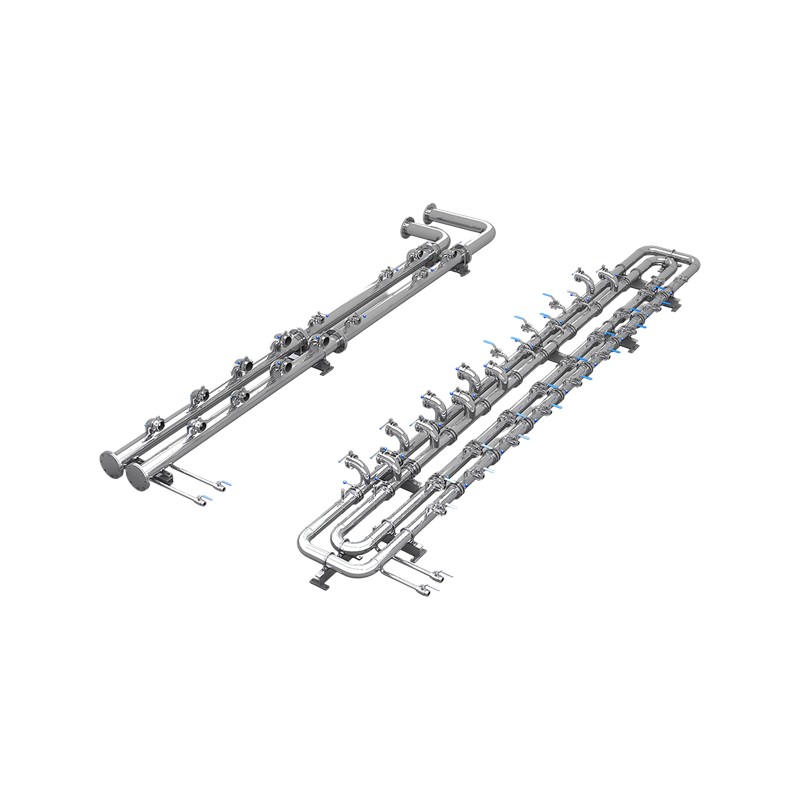
Product OverviewWM-SCL Secondary-Side Prefabricated Piping is a standardized coolant distribution system that connects the CDU to liquid-cooled server cabinets. The piping is prefabricated and quality...
See Details -
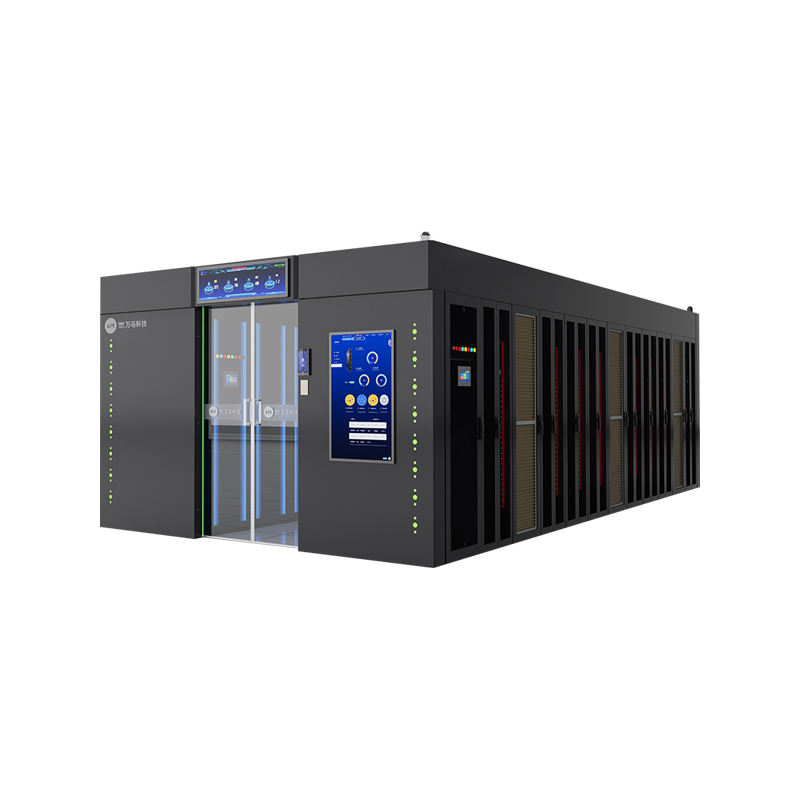
A micro-module data center (MMDC) is a new generation data center architecture that uses standardized modules as units, features prefabricated design, and allows for rapid deployment. It integrates t...
See Details -
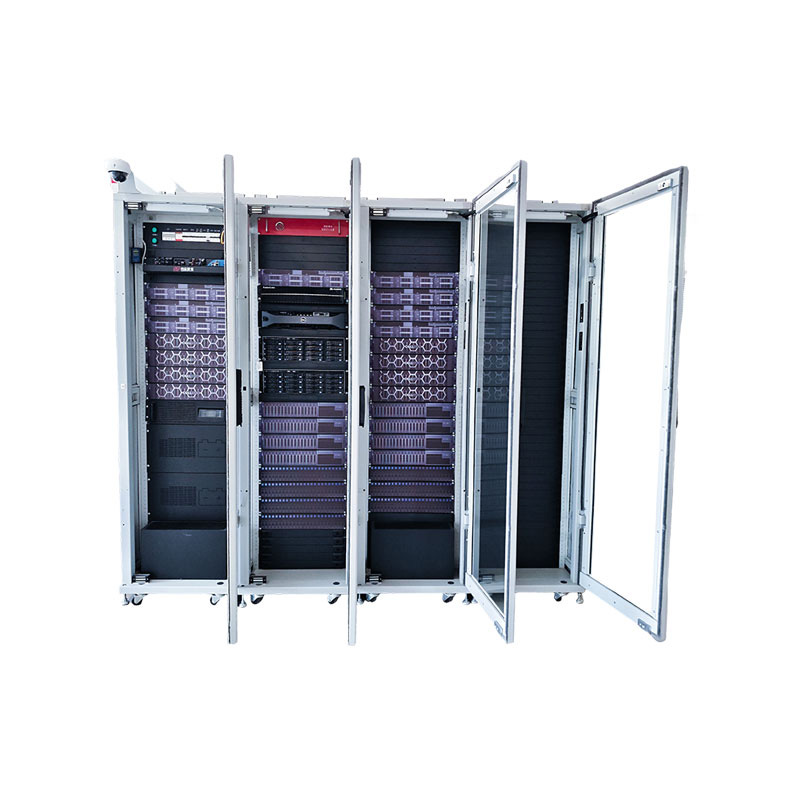
Product DefinitionThe Integrated Air-Cooled Cabinet adopts an "all-in-rack" design, deeply integrating cabinet structure, cooling, power distribution, cabling, and intelligent management subsystems to...
See Details
Ready to Get started ? Contact Us Now !

Product.
Contact Details.
-
 +86 13958188250
-
 +86 13958188250
-
 [email protected]
- Wanma Industrial Park Taihu Yuan Town Lin'an District Hangzhou City China.
QR Code

Copyright © Wanma Technology Co., Ltd. All Rights Reserved.
Privacy
Custom Ethernet Optical Network Railway Transit Equipments Suppliers
