

 English
 Français
 Español
 Português
 عربى
عربى





 Knowledge
Impact of Passive vs. Active Cooling Systems on BTS Equipment Energy Consumption and Failure Rates in Extreme Temperatures
How Passive Cooling Systems Perform in Extreme Heat or Cold
Passive thermal management relies on natural convection, heat sinks, insulation, and reflective coatings without mechanical compressors or fans. In an outdoor telecom cabinet for BTS base station, passive designs include louvered vents, double-wall construction, and phase-change materials (PCM). Below are key effects on BTS equipment:
- Energy consumption: Near-zero electrical draw for cooling/heating. Only minor power for cabinet monitoring sensors (< 5W typical).
- Failure rate impact in heat ( >40°C): High risk. Internal temperatures can exceed 65°C, causing BTS power amplifier failure, capacitor electrolyte leakage, and fan bearing seizure. Failure rate increases by 3x to 5x per +10°C above rated limit (Arrhenius equation).
- Failure rate impact in cold ( < -20°C): Moderate risk. LCD displays may freeze, lithium batteries lose capacity, and quartz crystals drift frequency. However, many BTS boards self-heat, keeping internals above -10°C.
- Typical use case: Temperate climates (-15°C to 35°C) or sites with low heat dissipation (< 150W per cabinet).
How Active Air Conditioning (Refrigeration or Thermoelectric) Systems Perform
Active systems include compressor-based air conditioners, thermoelectric coolers (TEC), or forced-air heat exchangers. These maintain a set internal temperature (e.g., 25°C ± 5°C) regardless of ambient extremes. Their influence on the outdoor telecom cabinet for BTS base station is as follows:
- Energy consumption: High to very high. A 1000W BTS load may require 300-600W for compressor cooling at 45°C ambient. Thermoelectric units consume 200-400W but with lower Coefficient of Performance (COP ~0.5-0.7).
- Failure rate impact in heat ( >40°C): Drastically reduced. Internal temperature held below 45°C. BTS component failure rate approaches that of a 25°C-controlled indoor environment (baseline MTBF of 100,000+ hours).
- Failure rate impact in cold ( < -20°C): Minimal heating required. Many active systems include an electric heater pad (50-150W) to prevent condensation and LCD freezing.
- Typical use case: Desert, tropical, or arctic regions with ambient -40°C to 55°C, or high-density BTS configurations dissipating > 500W.
Parameter Comparison: Passive vs. Active Cooling in Extreme Temperatures
The table below compares key engineering parameters for a standard outdoor telecom cabinet for BTS base station operating at 45°C ambient (hot) or -25°C ambient (cold).
| Parameter | Passive Thermal Design | Active Air Conditioning (Compressor) |
|---|---|---|
| Ambient range for reliable BTS operation | -15°C to 35°C | -40°C to 55°C |
| Internal cabinet temperature at 45°C ambient | 62-70°C (unsafe for most BTS) | 35-40°C (safe zone) |
| Annual cooling/heating energy consumption (kWh) | ~10-30 kWh (only fan/controller) | 2,500 - 5,500 kWh (depending on load and climate) |
| BTS annualized failure rate (AFR) at 45°C ambient | 35-50% (very high) | 3-6% (similar to indoor) |
| Battery life impact (VRLA or Li-ion) | 50% reduction per +10°C above 25°C (severe) | Less than 10% reduction (temperature controlled) |
| Maintenance interval | Every 6-12 months (cleaning vents) | Every 3-6 months (filter change, refrigerant check) |
| Initial cost premium vs. baseline cabinet | 0% (standard) | +200% to +350% |
Frequently Asked Questions (FAQ)
FAQ 1: Can I add a retrofit active cooling unit to an existing passive outdoor telecom cabinet?
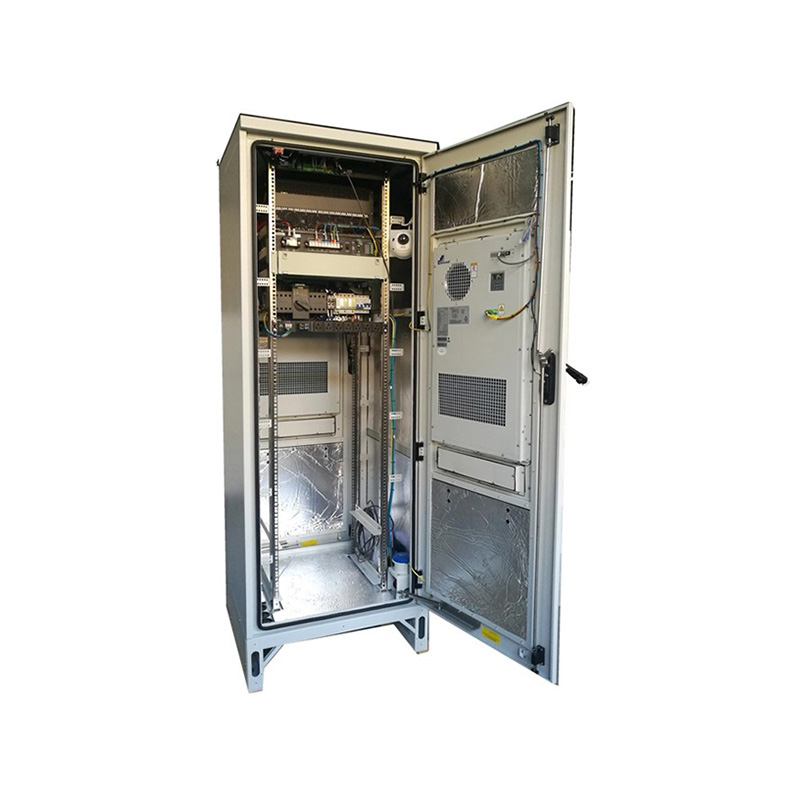
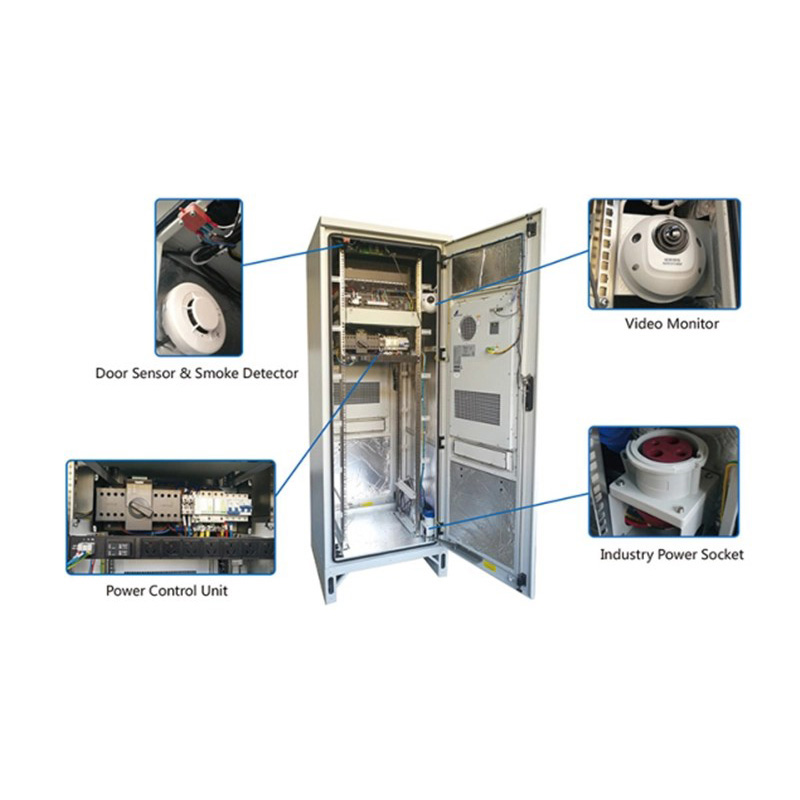
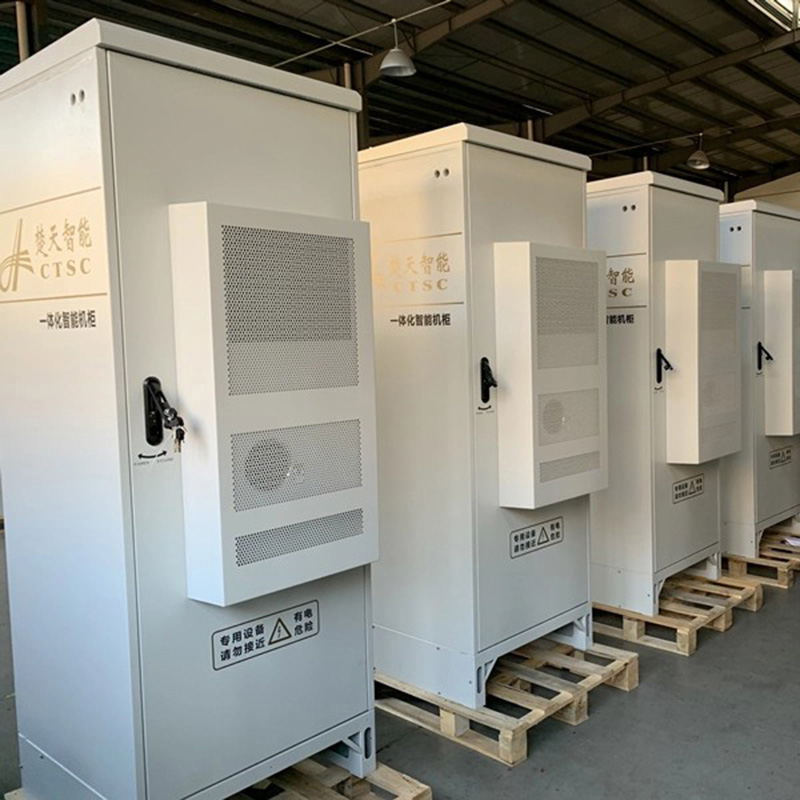
Answer: Yes, but it requires professional engineering. You must verify the cabinet has structural space for a 300-600W AC unit, sufficient weather sealing, and power distribution for the added load (including backup battery sizing). Many operators use an add-on thermoelectric or compressor unit mounted on a replacement door. For new deployments, choose a cabinet designed for active cooling. See example specifications in this outdoor telecom cabinet for BTS base station product reference.
FAQ 2: How do I calculate the annual energy cost difference between passive and active cooling?
Answer: Use this formula: Annual cost = (Cooling power in kW) × (annual runtime hours) × (electricity rate $/kWh). For a passive cabinet, cooling power ~0.005 kW × 8760h × $0.12 = ~$5.25/year. For an active compressor system at 45°C ambient, cooling power ~0.5 kW but runtime is ~70% of the year (6,132h) × $0.12 = $368/year. The actual BTS energy consumption (typically 500-2000W) is identical for both – only the thermal management overhead differs.
FAQ 3: In freezing climates, does an active system provide heating to prevent BTS failure?
Answer: Most active outdoor telecom cabinets include a thermostatically controlled electric heater (typically 50-150W) that activates below 5°C to prevent condensation and LCD freezing. However, many modern BTS units generate enough self-heat (300-600W) to keep the interior above 0°C even at -30°C ambient. Passive cabinets in extreme cold may require a small heater pad if the BTS is low-power (<150W). Without heating, electrolytic capacitors and batteries lose performance but rarely fail catastrophically; the main risk is LCD displays on external readouts.
Balancing IP Rating and Thermal Performance in BTS Telecommunications Outdoor Cabinets Based on Site Power and Climate
When selecting a BTS Telecommunications Outdoor Cabinet, engineers face an inherent design conflict: higher IP ratings (e.g., IP55, IP65) improve dust/water sealing but restrict airflow, while better heat dissipation often requires larger vents or fans that compromise ingress protection. This trade-off must be resolved by analyzing two key site parameters: total power dissipation (heat load) and local climate zone.
Understanding the IP Rating vs. Cooling Capacity Trade-Off
- Low IP rating (IP43 - IP54): Permits passive or forced airflow through louvers and filters. Best for low-power sites (< 300W) in dry, temperate climates. Cooling is almost free but dust accumulation requires quarterly filter cleaning.
- Medium IP rating (IP55): Compromise design with gasketed doors and controlled ventilation. Can support up to 800W using variable-speed fans. Suitable for most non-extreme environments.
- High IP rating (IP65 - IP66): Fully sealed against dust and jets. Heat removal depends entirely on conduction through walls plus active air conditioning or heat exchangers. Mandatory for coastal, desert, or heavy-industrial zones.
Parameter Comparison: IP Rating vs. Cooling Method vs. Max Supported Power
The table below compares viable combinations for a BTS Telecommunications Outdoor Cabinet based on site power dissipation and climate severity.
| IP Rating | Primary Cooling Method | Max Sustainable BTS Heat Load | Suitable Climate Zones | Annual Cooling Energy Cost (1000W load) |
|---|---|---|---|---|
| IP54 | Passive convection + filtered fans | 250W | Mild ( -10°C to 30°C) | $15 - $40 |
| IP55 | Forced air with intelligent fan speed control | 800W | Moderate ( -20°C to 40°C) | $80 - $180 |
| IP65 | Air-to-air heat exchanger (no outside air intake) | 600W | Dusty or saline (desert/coast) | $30 - $70 (fans only) |
| IP65 | Compressor-based air conditioner | 2000W | Extreme heat (45°C+) or high humidity | $350 - $700 |
| IP66 | Thermoelectric cooler + insulation | 500W | Heavy industrial or jet-wash zones | $200 - $400 |
How to Balance the Conflict: A Step-by-Step Decision Framework
- Step 1 – Calculate total site heat load: Sum of BTS transmitter power (W) + rectifier loss (5-10%) + battery float heat (0.5% of Ah rating). Example: A 1500W 5G BTS + 200Ah battery yields ~1650W.
- Step 2 – Identify climate severity: If annual hours above 35°C exceed 500 hours or salt spray is present, IP65 or higher is mandatory. For temperate zones with good shelter, IP54 may suffice.
- Step 3 – Match cooling method to load and IP:
- Load <300W + mild climate → IP54 passive → lowest cost.
- Load 300-800W + moderate climate → IP55 forced air → balanced.
- Load >800W or extreme ambient → IP65 + active AC → high cooling cost but necessary. - Step 4 – Evaluate total cost of ownership (TCO): An IP65 + AC solution may cost 3x more upfront than IP55 fans, but if dust or salt would destroy fan-cooled electronics within 18 months, the sealed solution is cheaper over 5 years.
Frequently Asked Questions (FAQ)
FAQ 1: Can I use an IP65 cabinet without active air conditioning for a 1000W BTS?
Answer: No. A fully sealed IP65 cabinet without active cooling acts as an oven. For a 1000W load, internal temperature will rise 30-40°C above ambient. At 35°C ambient, internal reaches 65-75°C – beyond the 55°C limit for most BTS power amplifiers. You must add a heat exchanger or air conditioner. For high-power sealed applications, review the thermal specifications in this BTS Telecommunications Outdoor Cabinet product reference.
FAQ 2: How often must I clean filters on an IP55 forced-air cabinet in a dusty environment?
Answer: In moderate dust (rural unpaved roads), clean every 3 months. In heavy dust (desert or construction zone), clean monthly or install a self-cleaning pre-filter. Clogged filters raise internal temperature by 8-12°C, accelerating BTS failure. Some operators install differential pressure sensors that trigger an alarm when filters reach 80% blockage.
FAQ 3: Does a higher IP rating always mean better equipment protection?
Answer: Not if the cabinet overheats. Overheating causes more failures than dust or rain in most locations. An IP54 cabinet with adequate cooling that keeps BTS below 55°C will have a longer mean time between failures (MTBF) than an IP65 cabinet without cooling that runs at 70°C. The optimal choice always balances environmental ingress risk against thermal stress.