

 English
 Français
 Español
 Português
 عربى
عربى






 Knowledge
Ingress Protection Ratings and What They Actually Guarantee in Field Conditions
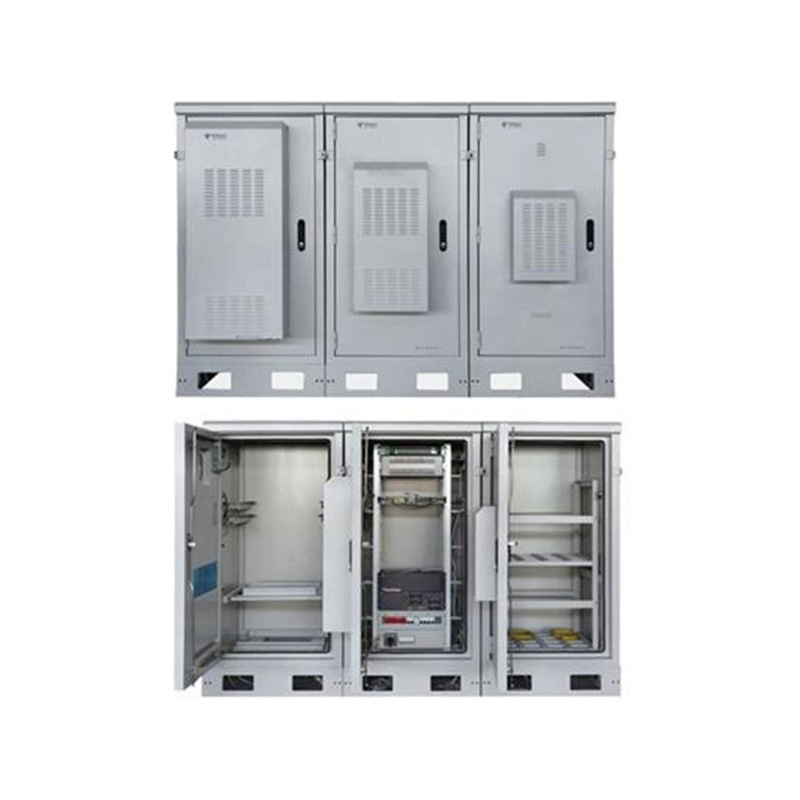
The IP rating system — defined under IEC 60529 — is the most commonly cited specification when evaluating enclosure suitability for outdoor deployment, but it is frequently misapplied. The two digits in an IP rating address solid particle ingress and liquid ingress independently: the first digit rates protection against dust and foreign objects on a scale of 0 to 6, while the second rates protection against water on a scale of 0 to 9K. An outdoor telecom cabinet specified at IP55 guarantees protection against dust ingress sufficient to prevent harmful deposits and against low-pressure water jets from any direction — but it provides no guarantee against submersion, condensation-driven moisture ingress through gasket degradation, or water that enters through cable entry points that were not properly sealed during installation.
This distinction matters because the IP rating is assigned to the enclosure as manufactured, not as installed. Cable glands, conduit entry points, and ventilation openings introduce ingress pathways that are entirely dependent on installation quality and ongoing maintenance for their integrity. Specifying IP65 or IP66 for an outdoor telecom cabinet establishes a baseline, but the sustained ingress protection in service is determined by gasket condition, door seal compression force retention, and the quality of all post-manufacture penetrations.
Thermal cycling compounds this issue. Repeated expansion and contraction of the enclosure structure and door seals over daily and seasonal temperature cycles gradually reduces gasket compression, particularly on enclosures that experience large temperature differentials — a common condition in deployments spanning desert, high-altitude, or continental climate zones. Gasket inspection intervals should be calibrated to the site's thermal cycle intensity, not to a generic annual maintenance schedule.
Thermal Management Strategies for Enclosures Without Mains-Powered Cooling
Not all outdoor telecom deployments have reliable access to mains power sufficient to run active cooling equipment continuously. Remote base station sites, highway corridor installations, and rural coverage nodes frequently operate on solar-plus-battery or limited-capacity grid connections where the power budget for enclosure climate control is constrained. In these conditions, passive and semi-passive thermal management strategies must carry a larger share of the heat rejection load than they would in a grid-connected urban installation.
Wanma Technology's deployment experience across national high-speed railway corridor infrastructure — environments that combine high ambient temperatures, direct solar radiation exposure, and strict limits on active maintenance intervention — has reinforced which passive thermal management measures deliver reliable results across multi-year operational cycles:
- Double-wall or foam-insulated enclosure panels reduce solar heat gain transmission into the internal volume by 40–60% compared to single-skin sheet steel construction
- Light-coloured exterior finishes with high solar reflectance index values lower surface temperature under direct radiation, reducing conducted heat gain into the enclosure
- Heat exchanger-based air-to-air cooling units circulate internal and external air through separated circuits, rejecting heat without exposing internal components to ambient particulates or humidity
- Thermostatically controlled fan units activate only when the internal-to-external temperature differential exceeds a defined threshold, minimising runtime and power draw during cooler periods
- Internal component layout that positions heat-generating equipment near the exhaust airflow path reduces the temperature gradient between the hottest component and the enclosure's rated maximum internal temperature
The thermal design target for outdoor telecom enclosures in high-ambient regions should maintain internal temperature below 45°C when external ambient reaches 55°C — a standard derived from equipment manufacturer specifications for the telecommunications hardware typically deployed in base station applications.
Corrosion Protection Requirements Across Different Deployment Environments
Corrosion is the most common cause of premature structural failure in outdoor enclosures, yet corrosion protection specifications are frequently reduced during procurement to achieve cost targets — with consequences that emerge only after two to three years of field exposure when the enclosure is no longer under warranty. The appropriate corrosion protection specification is determined by site environment classification, not by a generic outdoor standard, since the corrosion rate in a coastal marine environment can exceed the rate in a dry inland location by a factor of ten or more.
ISO 9223 classifies atmospheric corrosivity into six categories (C1 through CX), with C1 representing very low corrosivity in dry indoor environments and C5/CX representing high and very high corrosivity in industrial coastal zones with persistent salt spray and pollutant exposure. A mobile base station enclosure deployed at a coastal site should be specified to C4 or C5 corrosivity class as a minimum, which typically requires hot-dip galvanised or stainless-steel structural members, polyester powder coating with a minimum dry film thickness of 80–100 µm, and stainless-steel hardware for all external fasteners and hinges.
Internal surfaces are often overlooked in corrosion protection planning. Condensation on internal walls during temperature cycling can cause corrosion from the inside outward, particularly at welded joints and cut edges where protective coatings are thinnest. Internal epoxy lining or zinc phosphate primer applied to all internal surfaces before final coating provides a meaningful service life extension at modest additional cost during manufacture — and is far less expensive than field remediation of internal corrosion after deployment.
Physical Security Design in Unmanned Outdoor Installations
Outdoor telecom enclosures at unmanned sites are exposed to physical security risks that differ in character from those faced by staffed facilities. Opportunistic vandalism, copper theft, and targeted interference with telecommunications infrastructure are recurring threats in deployments along transportation corridors, in peri-urban fringe areas, and at remote coverage sites where response times following a security alert may be measured in hours rather than minutes.
Effective physical security in outdoor enclosure design is a layered problem, and each layer addresses a different threat profile. Structural resistance — enclosure wall gauge, door hinge design, and lock point count — determines how long forced entry takes and therefore whether opportunistic attacks are practically feasible. Electronic security — door contact sensors, vibration detection, and camera integration — provides event logging and alert generation for monitoring systems. Deterrence — visible security labelling, robust external appearance, and site lighting where power is available — reduces the probability of an attempted breach by communicating that the installation is monitored and hardened.
Three-point locking systems, 3 mm minimum door panel thickness, and concealed or protected hinge pins are the baseline physical security specification for outdoor telecom cabinets at unattended sites in moderate-risk environments. Higher-risk locations — urban fringe areas with documented infrastructure theft histories or politically sensitive communication nodes — warrant additional measures including security cages, ground anchoring provisions, and integration with central monitoring platforms that provide real-time alert escalation to response teams.