

 English
 Français
 Español
 Português
 عربى
عربى









 Knowledge
What Sets Containerized Data Centers Apart from Traditional Modular Builds
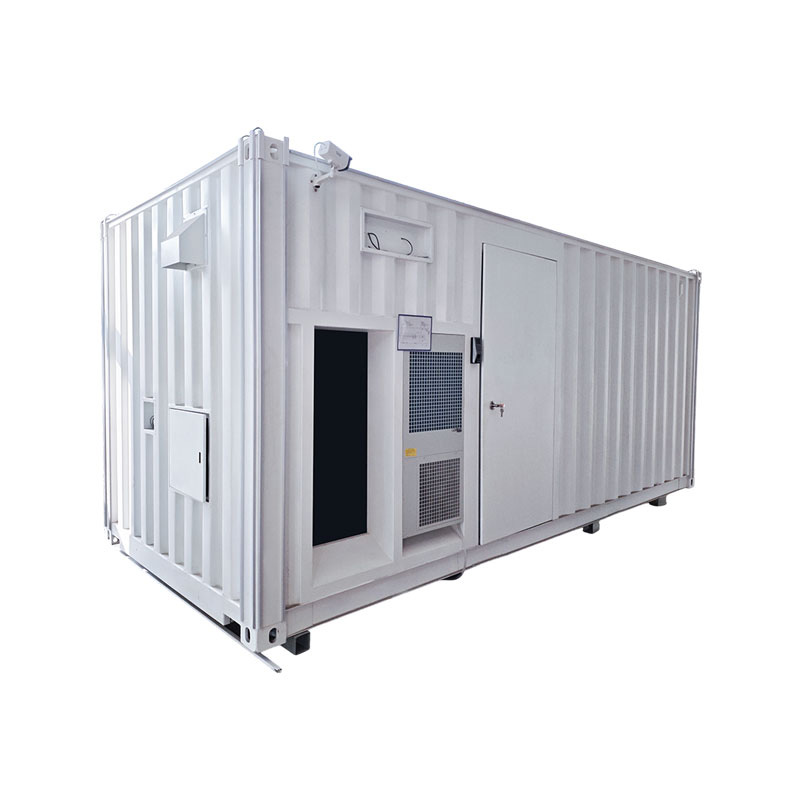
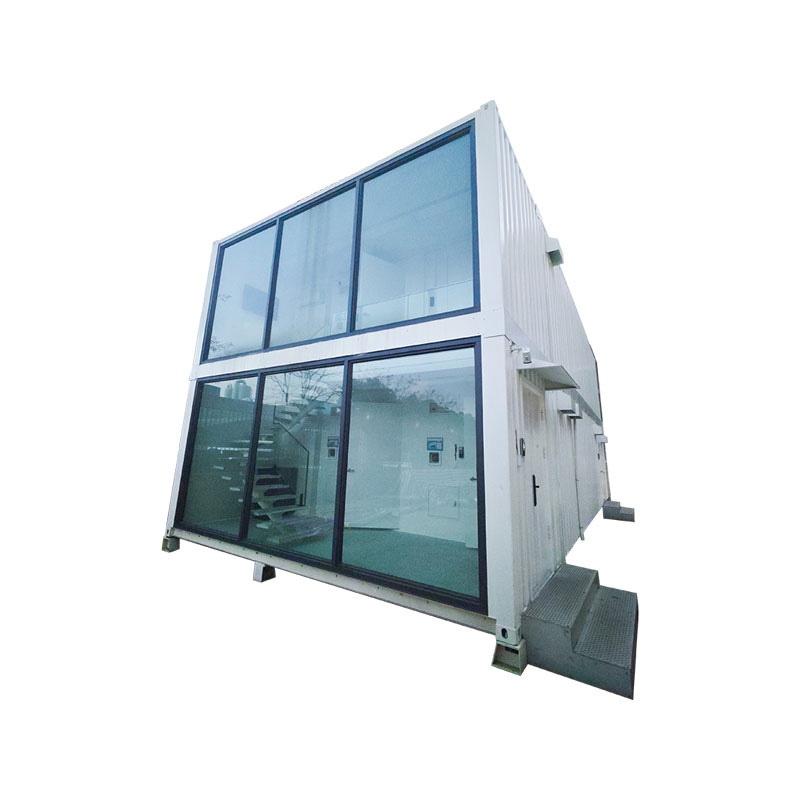
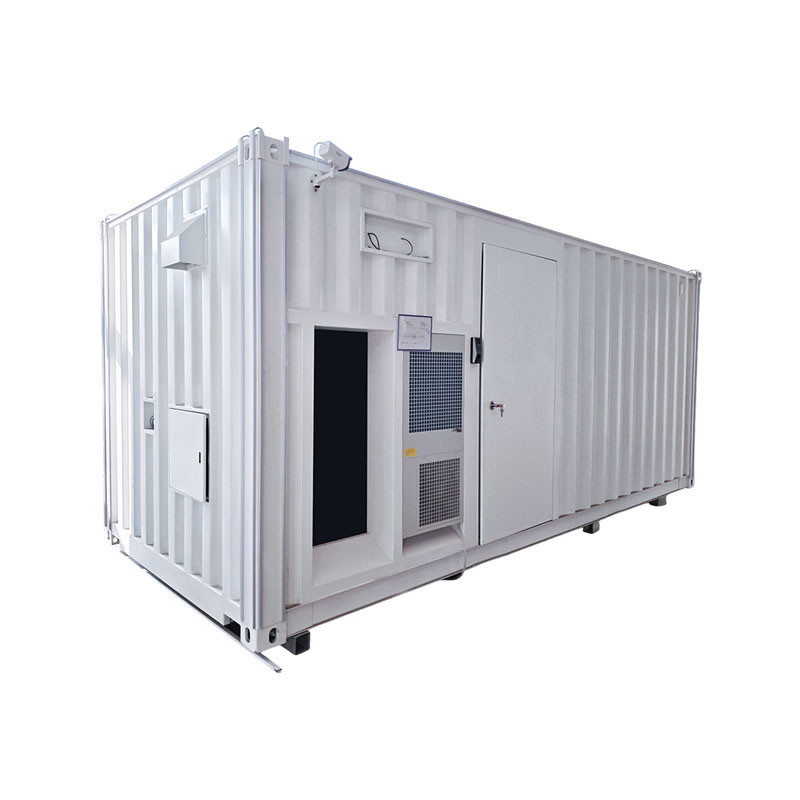
The distinction between a containerized data center and a conventional modular data center is often misunderstood. Modular designs typically refer to prefabricated infrastructure blocks — power modules, cooling modules, IT rows — that are assembled on a prepared building foundation. A containerized solution, by contrast, uses a standard ISO shipping container as the structural envelope, meaning the entire infrastructure stack ships and arrives as a single certified unit with no foundation preparation required beyond a level surface and utility connection points.
This distinction has meaningful implications for procurement, logistics, and site readiness. ISO containers are governed by internationally recognised dimensional and structural standards, which simplifies customs clearance, multi-modal freight, and crane lift planning across virtually every geography. The structural rating of a standard 20-foot container — typically certified to stack six units high under load — also provides inherent resistance to wind, seismic lateral forces, and unauthorised physical access that purpose-built enclosures must replicate through additional engineering. Wanma Technology's experience supplying infrastructure to national high-speed railway and urban rail transit environments informs this understanding of what ruggedised, field-deployable enclosures actually require to perform reliably under variable site conditions.
Factory integration eliminates the single largest source of deployment delay — on-site system integration and commissioning — by completing and testing the full infrastructure stack before the unit leaves the manufacturing facility. When the container arrives at the deployment site, the remaining work is utility connection and software configuration, not physical assembly.
Internal Layout Principles and Space Utilisation in a 20-Foot Envelope
A standard 20-foot ISO container provides an internal usable floor area of approximately 14.8 m² with an internal height of around 2.39 m. Fitting a complete data centre infrastructure — IT racks, power distribution, cooling, fire suppression, environmental monitoring, and cable management — into this volume requires a deliberate layout discipline that differs significantly from designing a conventional equipment room.
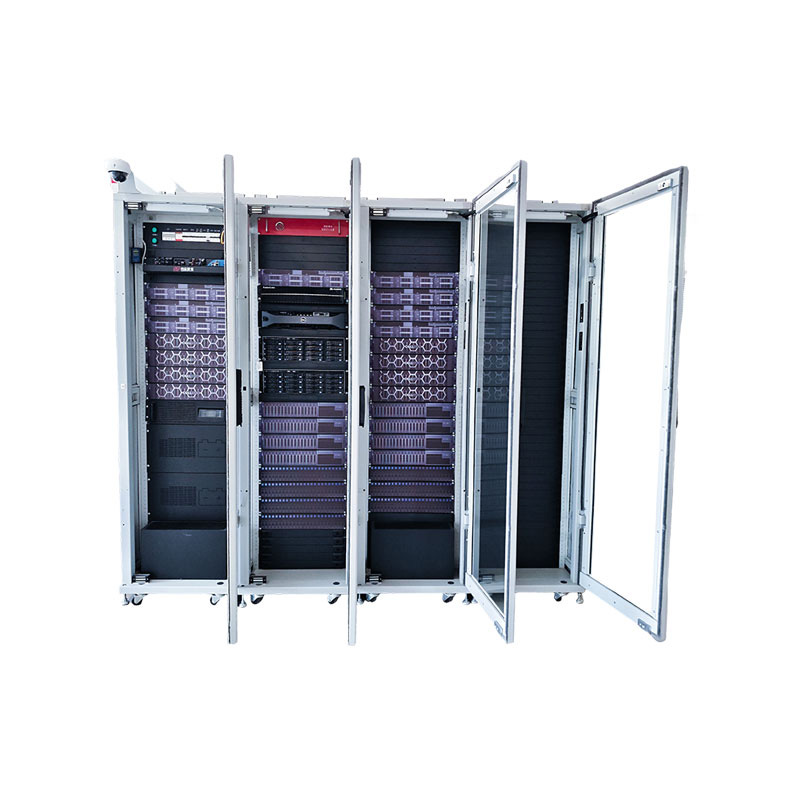
- IT racks are typically arranged in a single row or opposing double row, with aisle width calibrated to the minimum safe maintenance clearance rather than comfort-based spacing
- Power distribution and UPS modules are positioned at one end of the container to isolate high-voltage zones from IT servicing areas
- Precision cooling units are mounted to the container walls or ceiling rather than occupying floor area, preserving rack count within the available footprint
- Cable trays follow overhead routes to keep floor-level access paths clear and simplify post-deployment adds and changes
- Fire suppression agent storage and distribution piping are integrated into the ceiling structure, with discharge nozzles positioned to achieve uniform agent concentration throughout the internal volume
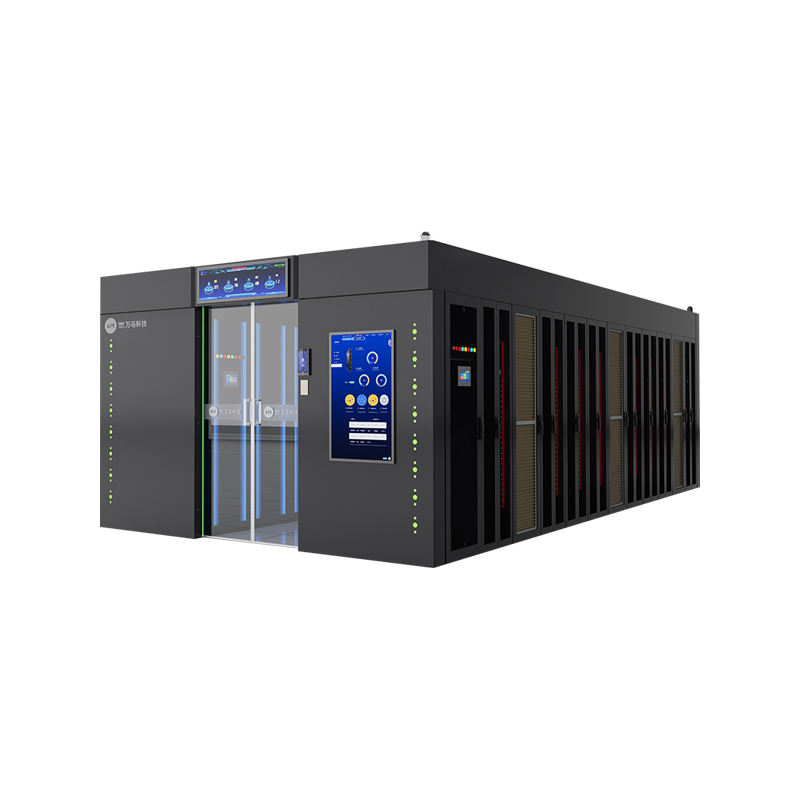
The 20ft containerized data center CDC-20 pre-integrates all of these subsystems in the factory, which means the spatial relationships between components are engineered and tested as a system rather than resolved through on-site improvisation. This approach also allows thermal validation — confirming that the cooling architecture delivers the designed airflow path and temperature differential under rated IT load — before the unit is shipped.
Edge and Remote Deployment Scenarios Where Containerized Infrastructure Has a Clear Advantage
Not all deployment scenarios have equal access to construction resources, skilled trades, or stable supply chains. The practical value of a self-contained, factory-integrated unit becomes most visible in conditions where conventional data centre construction faces logistical or timeline constraints that are difficult to resolve through procurement or project management alone.
| Deployment Scenario | Key Constraint Addressed | Typical Deployment Timeline |
|---|---|---|
| Edge computing node | No suitable building structure available at the edge site | Days to weeks |
| Remote industrial site | No local construction workforce or long lead times for materials | 2–4 weeks from delivery |
| Emergency response infrastructure | Immediate operational readiness required after site disruption | Hours after delivery |
| Temporary project IT hub | Fixed-term need with redeployment requirement at end of project | 1–3 days commissioning |
| Small-scale disaster recovery | Secondary site must be ready without permanent capital construction | Pre-staged, activate on demand |
In each of these contexts, the ability to relocate the infrastructure unit at the end of its deployment cycle — or redeploy it to a new site — represents a capital efficiency advantage that permanent construction cannot match. The asset remains on the balance sheet as a depreciable piece of equipment rather than being absorbed into building improvements with limited residual value.
Environmental Monitoring Architecture Inside a Sealed Container Environment
Operating a data centre inside a sealed metal enclosure introduces monitoring requirements that differ from those in an open equipment room. The thermal mass of the container structure, the limited internal air volume, and the absence of natural ventilation make real-time sensor coverage more critical — and make the consequences of undetected sensor failure more severe — than in a conventional facility where manual inspection is practical.
Comprehensive environmental monitoring for a containerized deployment typically spans temperature and humidity at multiple rack positions, differential air pressure across the cooling unit, water leak detection at all condensate drain points and external penetrations, smoke and gas detection calibrated to the enclosed volume, door contact sensors on all access points, and power quality measurements at the main input and each distribution branch. All sensor data should feed into a unified management interface that supports remote access, given that many containerized deployments operate with minimal or no permanent on-site staffing.
The value of this monitoring architecture extends beyond fault detection. Trending analysis of temperature differentials, cooling unit runtime, and power draw over time provides early indicators of filter fouling, refrigerant loss, and UPS battery degradation — all of which progress gradually and are far less disruptive to address when caught at the trend stage rather than at the point of failure. Our integration work across communication and infrastructure applications has consistently reinforced that 20ft containerized data center CDC-20 deployments perform most reliably when the monitoring layer is treated as a core infrastructure component from the design stage, not added as an afterthought during commissioning.